
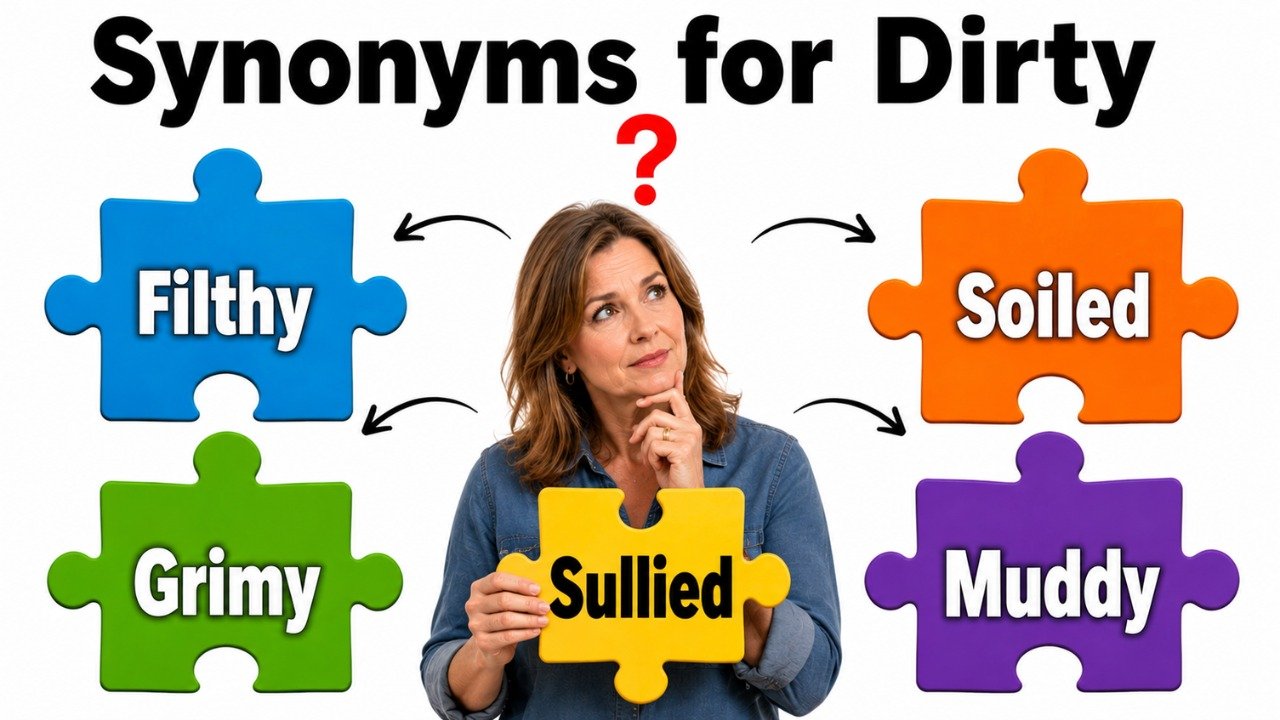
Quick Answer: The best synonyms for dirty include unclean, filthy, soiled, stained, grimy, muddy, contaminated, polluted, dishonest, and obscene. Use unclean as a neutral general replacement. Filthy suggests extreme dirt, while soiled and stained describe marks on clothing or surfaces. Grimy suits dirt that has built up over time. Contaminated and polluted work for unsafe water, air, food, or environments. Dishonest describes unfair behavior, while obscene is appropriate for offensive language, jokes, or content.
Pronunciation and Word Details
Word: Dirty.
Pronunciation: /ˈdɜːrti/.
Part of Speech: Adjective and verb.
Meaning: Covered with dirt, made impure, morally dishonest, or offensive in language or behavior.
US Pronunciation:
UK Pronunciation:
What Does “Dirty” Mean?
Dirty means covered with dirt, dust, mud, grease, stains, or another unwanted substance.
As an adjective, dirty can describe clothing, hands, floors, dishes, streets, water, language, money, behavior, or methods. In the sentence “His shoes were dirty,” the word means that the shoes had visible dirt or mud on them.
Dirty can also describe something unsafe or impure. Dirty water may contain harmful substances, while dirty air may be filled with smoke or pollution. In these contexts, contaminated, polluted, or unsanitary may be more precise.
The word also has figurative meanings. A dirty trick is unfair or dishonest. Dirty money is connected with illegal or corrupt activity. A dirty joke contains vulgar, indecent, or offensive language.
As a verb, dirty means to make something unclean. For example, “Do not dirty the clean floor” means not to place dirt or marks on it.
Meaning, Tone, and Context of “Dirty”
Dirty is a common and direct word used in both casual conversation and descriptive writing. Its tone changes significantly according to context.
When describing physical dirt, dirty is usually neutral and conversational. It can refer to objects that need washing or cleaning, such as dirty clothes, dirty dishes, or dirty windows.
When used for severe uncleanliness, stronger alternatives such as filthy, foul, grimy, or unsanitary may communicate the condition more accurately. Filthy suggests an extreme level of dirt, while grimy often describes a surface covered with old or sticky dirt.
In environmental or scientific contexts, contaminated, polluted, tainted, and impure are more suitable. These words indicate that a substance may be unsafe rather than merely unattractive.
Dirty can also sound critical or emotional when describing behavior. Expressions such as dirty politics, dirty tactics, or a dirty deal suggest dishonesty, corruption, or unfairness.
When referring to language or humor, dirty usually means vulgar, obscene, indecent, or suggestive. Writers should select a synonym that reflects the exact degree of offensiveness.
When and How to Use “Dirty”
For Unclean Objects
Use dirty when an object has visible dust, mud, grease, food, or another unwanted substance on it.
Example: The children left their dirty shoes near the door.
For Stained Clothing
Use dirty when clothing needs to be washed because of marks, sweat, mud, or food.
Example: Put the dirty shirts in the laundry basket.
For Untidy Places
Use dirty when a room, street, kitchen, or public space has rubbish, dust, stains, or poor cleanliness.
Example: The kitchen became dirty after the large meal.
For Unsafe Substances
Use dirty when water, air, food, or soil contains harmful material, although contaminated or polluted may be more precise.
Example: The villagers avoided drinking the dirty water.
For Dishonest Behavior
Use dirty when a person uses unfair, secretive, or dishonest methods.
Example: The competitors were accused of using dirty tactics.
For Offensive Language
Use dirty when a joke, word, story, or comment contains sexual, vulgar, or indecent material.
Example: The speaker avoided using dirty jokes during the formal event.
For Illegal Money
Use dirty when money has been gained through crime, corruption, or dishonest activity.
Example: The investigation focused on the source of the dirty money.
For Difficult or Unpleasant Work
Use dirty when a task is physically unpleasant, morally questionable, or likely to damage someone’s reputation.
Example: He refused to do another person’s dirty work.
Best Synonyms for Dirty
Unclean: Not clean or free from dirt.
Example: The plates remained unclean after a quick rinse.
Filthy: Extremely dirty and unpleasant.
Example: His boots were filthy after walking through the field.
Soiled: Made dirty, especially by stains, food, or bodily substances.
Example: She replaced the soiled tablecloth with a clean one.
Stained: Marked by a substance that is difficult to remove.
Example: The carpet was stained with coffee.
Grimy: Covered with a layer of old, dark, or sticky dirt.
Example: The mechanic washed his grimy hands.
Muddy: Covered with or containing wet earth.
Example: The path became muddy after the rain.
Contaminated: Made unsafe or impure by harmful substances.
Example: The contaminated food was removed immediately.
Polluted: Made harmful or unpleasant by waste, smoke, chemicals, or other pollutants.
Example: The polluted river could no longer support healthy wildlife.
Dishonest: Untruthful, unfair, or intended to deceive.
Example: The dishonest deal caused serious financial losses.
Obscene: Extremely offensive, indecent, or morally unacceptable.
Example: The editor removed the obscene language from the article.
50 Synonyms for Dirty with Short Meanings
- Unclean: Not clean or free from dirt.
- Filthy: Extremely dirty and unpleasant.
- Soiled: Made dirty by contact with another substance.
- Stained: Marked or discolored by a substance.
- Grimy: Covered with old, dark, or sticky dirt.
- Muddy: Covered with or containing wet soil.
- Dusty: Covered with fine particles of dust.
- Smudged: Marked with blurred dirt, ink, or grease.
- Greasy: Covered with or containing grease.
- Oily: Covered with oil or having an oily texture.
- Grubby: Somewhat dirty, especially from handling or use.
- Mucky: Covered with dirt, mud, or unpleasant material.
- Dingy: Dark, dull, and unattractively dirty.
- Messy: Untidy, disorganized, or unclean.
- Untidy: Not arranged or kept neatly.
- Littered: Covered with scattered rubbish or unwanted objects.
- Fouled: Made dirty, unpleasant, or unusable.
- Polluted: Made harmful by waste or damaging substances.
- Contaminated: Made impure or unsafe through contact with something harmful.
- Tainted: Spoiled or affected by an undesirable substance or influence.
- Impure: Mixed with unwanted or harmful material.
- Unsanitary: Not clean enough to protect health.
- Unhygienic: Likely to cause illness because of poor cleanliness.
- Foul: Extremely unpleasant, dirty, or offensive.
- Sullied: Damaged in cleanliness, purity, or reputation.
- Blemished: Marked by a flaw, stain, or imperfection.
- Defiled: Made impure, dishonored, or unclean.
- Corrupt: Dishonest or involved in illegal behavior.
- Dishonest: Intended to deceive or avoid fairness.
- Deceitful: Deliberately misleading or untruthful.
- Fraudulent: Based on deception for personal gain.
- Crooked: Dishonest, illegal, or unfair.
- Underhanded: Secretive and unfair in method.
- Unethical: Not following accepted moral standards.
- Shady: Suspicious, dishonest, or legally questionable.
- Sordid: Morally unpleasant, dishonest, or shameful.
- Disreputable: Having a poor reputation because of bad behavior.
- Obscene: Highly offensive or indecent.
- Vulgar: Lacking good taste or using offensive language.
- Indecent: Offensive to accepted standards of behavior.
- Lewd: Sexually crude or offensive.
- Suggestive: Indirectly referring to sexual or improper ideas.
- Explicit: Stated or shown in a very direct and potentially offensive way.
- Offensive: Likely to upset, insult, or disgust people.
- Naughty: Mildly improper, disobedient, or suggestive.
- Mean: Unkind, unfair, or intended to cause harm.
- Unfair: Not treating people according to equal or reasonable standards.
- Malicious: Intended to harm, embarrass, or damage someone.
- Shameful: Deserving strong criticism or embarrassment.
- Base: Morally low, dishonorable, or lacking principles.
Read Also:
Synonyms for Empower

Synonyms for Dirty by Context
When Dirty Means Physically Unclean
When dirty describes an object or surface that needs cleaning, use unclean, filthy, soiled, stained, grimy, dusty, greasy, grubby, or mucky.
Unclean: A neutral and direct alternative that works in most physical contexts.
Example: The equipment was unclean and needed to be washed.
Filthy: A much stronger word that suggests extreme dirt.
Example: The abandoned room was filthy.
Soiled: Often used for clothing, bedding, cloth, and other materials.
Example: The nurse removed the soiled sheets.
Grimy: Suitable for skin, machinery, windows, walls, and surfaces covered with old dirt.
Example: The workshop windows were grimy.
Grubby: An informal word for something slightly dirty through frequent handling.
Example: The child held a grubby toy.
When Dirty Means Covered With Mud or Dust
Use muddy, dusty, smudged, stained, mucky, or blemished when the type of dirt is visible or identifiable.
Muddy: Best for objects covered with wet earth.
Example: The players returned with muddy uniforms.
Dusty: Describes a surface covered with dry particles.
Example: The bookshelf was dusty after months without cleaning.
Smudged: Describes a blurred or smeared mark.
Example: The page was smudged with ink.
Stained: Indicates a lasting mark or discoloration.
Example: His shirt was stained with paint.
Mucky: An informal choice for something covered with mud or unpleasant dirt.
Example: The dog left mucky footprints on the floor.
When Dirty Means Unsafe or Impure
When dirty describes something that may be harmful to health, use contaminated, polluted, tainted, impure, unsanitary, unhygienic, or fouled.
Contaminated: Best for food, water, soil, equipment, and materials exposed to harmful substances.
Example: The contaminated water was declared unsafe.
Polluted: Commonly used for air, rivers, oceans, land, and the environment.
Example: Polluted air affected people throughout the city.
Tainted: Suggests that something has been spoiled or affected by contact with an unwanted substance.
Example: The tainted food was thrown away.
Unsanitary: Describes conditions that may spread illness.
Example: The restaurant was closed because of unsanitary conditions.
Unhygienic: Describes habits, practices, or places that fail to meet cleanliness standards.
Example: Sharing unwashed utensils can be unhygienic.
When Dirty Means Dishonest
When dirty refers to unfair or dishonest actions, use corrupt, deceitful, fraudulent, crooked, underhanded, unethical, shady, or sordid.
Corrupt: Best for people or systems that misuse power for personal gain.
Example: The corrupt official accepted illegal payments.
Fraudulent: Describes activity involving deliberate deception, especially for money.
Example: The business was investigated for fraudulent transactions.
Crooked: An informal word for dishonest or illegal behavior.
Example: They refused to participate in the crooked deal.
Underhanded: Describes secretive and unfair methods.
Example: The team gained an advantage through underhanded tactics.
Unethical: Appropriate for professional, academic, or business behavior that violates moral standards.
Example: Hiding the results would be unethical.
When Dirty Means Offensive
When dirty refers to language, humor, stories, images, or behavior, use obscene, vulgar, indecent, lewd, suggestive, explicit, or offensive.
Obscene: A strong word for material considered extremely offensive or indecent.
Example: The obscene remark shocked the audience.
Vulgar: Describes rude language or behavior that lacks good taste.
Example: His vulgar comments made everyone uncomfortable.
Indecent: Often used for behavior or material that violates accepted standards.
Example: The complaint concerned indecent language.
Suggestive: Describes language or behavior that indirectly refers to improper or sexual ideas.
Example: The advertisement contained suggestive wording.
Explicit: Means that information or content is presented directly and clearly.
Example: The book contains explicit descriptions intended for mature readers.
When Dirty Means Mean or Unfair
Use unfair, mean, malicious, underhanded, shameful, or base when dirty describes an action intended to hurt or disadvantage someone.
Unfair: The most neutral alternative for unequal or unreasonable treatment.
Example: Changing the rules without warning was unfair.
Mean: Describes an unkind action or comment.
Example: Spreading that story was a mean thing to do.
Malicious: Suggests a deliberate desire to cause harm.
Example: The malicious accusation damaged her reputation.
Shameful: Expresses strong moral criticism.
Example: Their treatment of the workers was shameful.
Base: A formal or literary word for morally low behavior.
Example: He acted from base motives rather than genuine concern.
Another Word for Dirty
Unclean is the best general replacement for dirty when describing an object, surface, place, or piece of clothing. However, a more specific synonym usually creates a clearer sentence.
Use filthy for extreme dirt, stained for visible marks, contaminated for unsafe substances, dishonest for immoral behavior, and obscene for offensive language.
Original: The kitchen floor was dirty.
Better Option: The kitchen floor was grimy.
Original: The water looked dirty.
Better Option: The water appeared contaminated.
Original: They used a dirty method to win.
Better Option: They used an underhanded method to win.
Original: He told a dirty joke.
Better Option: He told a vulgar joke.
When Not to Use “Dirty”
Avoid dirty when the sentence requires scientific, medical, environmental, or professional precision. Contaminated, polluted, unsanitary, or unhygienic may explain the risk more clearly.
Weak: The laboratory equipment was dirty.
Better: The laboratory equipment was contaminated.
Do not use dirty when you only mean untidy. A room may be messy without containing dust, stains, or harmful material.
Weak: Her desk was dirty because the papers were disorganized.
Better: Her desk was untidy because the papers were disorganized.
Avoid dirty when discussing a visible mark that does not affect the entire object. Stained, spotted, smudged, or blemished may be more accurate.
Weak: The clean shirt became dirty from one drop of ink.
Better: The clean shirt became stained by one drop of ink.
Do not use dirty in formal writing when describing corruption or illegal activity without explaining the behavior.
Weak: The report uncovered dirty activity.
Better: The report uncovered fraudulent activity.
Dirty may also sound unnecessarily harsh when a milder word is enough.
Weak: The child had a dirty face after eating.
Better: The child had a slightly messy face after eating.
Words Commonly Confused With Dirty
Dirty vs Messy: Dirty means covered with unwanted material, while messy means disorganized or untidy. A room can be messy but still clean.
Dirty vs Filthy: Dirty describes general uncleanliness. Filthy means extremely dirty and carries a stronger negative tone.
Dirty vs Soiled: Dirty is broad, while soiled is commonly used for clothing, fabric, bedding, and materials marked by use or contact.
Dirty vs Stained: Dirty suggests removable dirt or general uncleanliness. Stained describes a visible mark that may be difficult to remove.
Dirty vs Grimy: Dirty is neutral, while grimy describes a layer of old, sticky, or dark dirt.
Dirty vs Contaminated: Dirty may refer to appearance. Contaminated means that something contains harmful or unwanted substances.
Dirty vs Polluted: Dirty can describe almost anything unclean. Polluted usually refers to air, water, soil, or environments harmed by waste.
Dirty vs Corrupt: Dirty may informally describe dishonest behavior. Corrupt specifically refers to serious dishonesty, often involving money or power.
Dirty vs Obscene: Dirty is an informal description of offensive material. Obscene is stronger and more formal.
Which Synonym Should You Choose?
Choose unclean for a neutral description of something that needs cleaning.
Choose filthy when something is extremely dirty and unpleasant.
Choose soiled for clothing, bedding, cloth, or fabric marked through use.
Choose stained when a substance has left a visible mark.
Choose grimy for hands, windows, tools, walls, or surfaces covered with old dirt.
Choose muddy for shoes, paths, clothing, or animals covered with wet soil.
Choose dusty for objects or spaces covered with dry particles.
Choose greasy for kitchens, tools, machinery, dishes, or surfaces covered with fat or grease.
Choose messy when something is disorganized rather than physically unclean.
Choose contaminated for unsafe food, water, medical equipment, or materials.
Choose polluted for air, rivers, oceans, soil, and the environment.
Choose unsanitary for places or conditions that may harm health.
Choose dishonest when describing behavior intended to deceive.
Choose fraudulent for illegal deception involving money, documents, or transactions.
Choose underhanded for secretive and unfair methods.
Choose unethical for actions that violate professional or moral standards.
Choose obscene for highly offensive language or material.
Choose vulgar for rude language that lacks good taste.
Choose suggestive when the meaning is indirect rather than openly stated.
Choose unfair for actions that do not follow equal or reasonable standards.
Real Life Examples of “Dirty” in Sentences
Original: His hands were dirty after repairing the machine.
Better Option: His hands were grimy after repairing the machine.
Original: The children came home in dirty clothes.
Better Option: The children came home in muddy clothes.
Original: The dirty dishes were left in the sink.
Better Option: The unclean dishes were left in the sink.
Original: The river became dirty because of industrial waste.
Better Option: The river became polluted because of industrial waste.
Original: The food was dirty and unsafe to eat.
Better Option: The food was contaminated and unsafe to eat.
Original: The company used dirty methods to hide the truth.
Better Option: The company used dishonest methods to hide the truth.
Original: They played a dirty trick on their colleague.
Better Option: They played an underhanded trick on their colleague.
Original: The comedian told several dirty jokes.
Better Option: The comedian told several vulgar jokes.
Original: The old windows looked dirty.
Better Option: The old windows looked grimy.
Original: The investigation uncovered dirty financial activity.
Better Option: The investigation uncovered fraudulent financial activity.
Synonym Groups and Usage Differences
Physical Dirt Group
Unclean, filthy, soiled, stained, grimy, grubby, mucky, dusty, greasy, and oily describe visible dirt or unwanted material.
Unclean is neutral, while filthy is extreme. Soiled and stained work well for fabric. Grimy suggests old dirt, and greasy describes oily residue.
Example: The mechanic wore a grimy uniform after working all day.
Mud and Mark Group
Muddy, smudged, stained, blemished, mucky, and sullied describe specific marks or substances.
Muddy refers to wet earth. Smudged describes blurred marks, while blemished refers to an imperfection in appearance.
Example: The document was smudged where the ink had not dried.
Health and Purity Group
Contaminated, polluted, tainted, impure, unsanitary, unhygienic, fouled, and defiled relate to safety, purity, and cleanliness.
Contaminated is common for food and water. Polluted suits environmental damage, while unsanitary describes unhealthy conditions.
Example: The area was declared unsafe because the soil was contaminated.
Dishonesty Group
Corrupt, dishonest, deceitful, fraudulent, crooked, underhanded, unethical, shady, and sordid describe immoral conduct.
Dishonest is broad. Fraudulent involves planned deception, while corrupt often involves the misuse of money or power.
Example: The audit revealed fraudulent financial records.
Offensive Language Group
Obscene, vulgar, indecent, lewd, suggestive, explicit, offensive, and naughty describe improper language or behavior.
Obscene and lewd are strong. Vulgar refers to poor taste, while suggestive communicates an indirect meaning.
Example: The formal audience objected to the vulgar remarks.
Unfair Action Group
Mean, unfair, malicious, shameful, base, underhanded, and unethical describe actions that harm or disadvantage others.
Unfair is neutral, while malicious suggests deliberate harm. Base is more formal and strongly critical.
Example: Publishing the false accusation was a malicious act.
Antonyms of Dirty
The correct opposite of dirty depends on whether the word refers to cleanliness, purity, honesty, or language.
Clean: Free from dirt, stains, or unwanted material.
Spotless: Completely clean with no visible marks.
Immaculate: Perfectly clean, neat, or well maintained.
Sanitary: Clean enough to protect health.
Hygienic: Following practices that prevent illness.
Pure: Free from harmful or unwanted substances.
Unpolluted: Not damaged by waste, smoke, or chemicals.
Uncontaminated: Free from harmful material.
Honest: Truthful and fair in behavior.
Ethical: Following accepted moral or professional standards.
Fair: Treating people reasonably and equally.
Decent: Acceptable according to moral or social standards.
Respectable: Considered proper, honorable, and worthy of respect.
Innocent: Not guilty of wrongdoing or offensive intent.
Wholesome: Morally healthy, clean, and suitable.
Comparison of Dirty and Related Words
Dirty vs Filthy
Dirty means unclean, while filthy describes an extreme and unpleasant level of dirt.
Example With Dirty: The shoes were dirty after the walk.
Example With Filthy: The shoes were filthy after falling into the muddy ditch.
Dirty vs Soiled
Dirty is a broad word. Soiled is often used for fabric, clothing, bedding, and materials marked by contact.
Example With Dirty: He removed his dirty jacket.
Example With Soiled: The nurse replaced the soiled bedding.
Dirty vs Messy
Dirty refers to physical uncleanliness. Messy refers to disorder and poor organization.
Example With Dirty: The floor was dirty from spilled food.
Example With Messy: The desk was messy because papers covered every surface.
Dirty vs Contaminated
Dirty may describe appearance, while contaminated indicates possible danger or impurity.
Example With Dirty: The glass looked dirty.
Example With Contaminated: The water was contaminated with harmful material.
Dirty vs Polluted
Dirty is general and informal. Polluted specifically describes environmental damage caused by waste or harmful substances.
Example With Dirty: The stream looked dirty after the storm.
Example With Polluted: The river was polluted by chemical waste.
Dirty vs Dishonest
Dirty may figuratively describe unfair behavior. Dishonest directly communicates deception or a lack of truthfulness.
Example With Dirty: They used a dirty tactic during the competition.
Example With Dishonest: They used dishonest information to influence the result.
Dirty vs Obscene
Dirty is an informal description of offensive language or humor. Obscene is stronger and often more formal.
Example With Dirty: He told a dirty joke.
Example With Obscene: The complaint referred to obscene language.
Common Phrases and Expressions With Dirty
Dirty Clothes: Clothing that needs to be washed.
Example: Place the dirty clothes in the basket.
Dirty Hands: Hands covered with dirt, grease, or another substance.
Example: Wash your dirty hands before eating.
Dirty Water: Water that contains dirt, waste, or unsafe material.
Example: The dirty water was unsuitable for drinking.
Dirty Dishes: Plates, cups, and utensils that need washing.
Example: The sink was filled with dirty dishes.
Dirty Joke: A joke containing vulgar, indecent, or suggestive material.
Example: He avoided telling a dirty joke at the formal dinner.
Dirty Trick: A dishonest or unfair action intended to disadvantage someone.
Example: Hiding the documents was a dirty trick.
Dirty Look: An angry, disapproving, or unfriendly facial expression.
Example: She gave him a dirty look after the rude interruption.
Dirty Money: Money gained through illegal or corrupt activity.
Example: The authorities investigated the source of the dirty money.
Dirty Work: Unpleasant, dishonest, or morally questionable work.
Example: He expected others to do his dirty work.
Dirty Laundry: Private problems, embarrassing matters, or clothing that needs washing.
Example: They agreed not to discuss their dirty laundry in public.
Common Mistakes to Avoid
Do not use dirty and messy as perfect synonyms. A place can be messy because objects are disorganized but still be physically clean.
Avoid using filthy when the dirt is minor. Filthy is a strong word and may sound exaggerated.
Do not describe unsafe water as merely dirty in formal, medical, or scientific writing. Contaminated or polluted provides a more precise meaning.
Be careful when using dirty to describe people. Calling a person dirty may suggest poor hygiene, dishonesty, or offensive behavior and can sound insulting.
Avoid replacing dirty with corrupt when describing physical dirt. Corrupt refers to dishonesty, damaged systems, or moral wrongdoing.
Do not use obscene for mild or playful language. Obscene communicates a much stronger level of offensiveness.
Avoid writing “more dirtier.” The correct comparative form is dirtier, and the correct superlative is dirtiest.
Use dirty before a noun when it functions as an adjective, as in “dirty shoes.” Use dirtied when describing an action that has already happened, as in “The muddy boots dirtied the floor.”
Conclusion
The best synonyms for dirty depend on whether you are describing physical dirt, harmful contamination, dishonest behavior, or offensive language. Unclean, soiled, stained, grimy, and filthy suit objects and surfaces. Contaminated, polluted, and unsanitary describe unsafe conditions. Dishonest, corrupt, fraudulent, and underhanded fit immoral actions, while vulgar, obscene, and indecent describe offensive language. Choosing a precise alternative from these synonyms for dirty will make your writing clearer, more natural, and better matched to the intended context.
FAQs About Synonyms for Dirty
What Is the Best Synonym for Dirty?
Unclean is the best neutral synonym for dirty. Filthy is stronger, while soiled, stained, grimy, or muddy may be more specific.
What Is a Stronger Word Than Dirty?
Filthy, foul, grimy, and unsanitary are stronger alternatives. The best choice depends on the type and severity of the dirt.
What Is a Formal Synonym for Dirty?
Contaminated, polluted, unsanitary, impure, unethical, and obscene are formal alternatives for different meanings of dirty.
What Is Another Word for Dirty Clothes?
Soiled, stained, muddy, grubby, or unclean can describe dirty clothes. Soiled is especially common in formal descriptions.
What Is a Synonym for Dirty Behavior?
Dishonest, corrupt, underhanded, unethical, deceitful, shady, and fraudulent can describe dirty behavior.
What Is a Synonym for a Dirty Joke?
Vulgar, obscene, indecent, lewd, suggestive, and offensive can describe a dirty joke.
What Is the Opposite of Dirty?
Clean is the most common opposite. Other antonyms include spotless, immaculate, sanitary, pure, honest, ethical, and decent.
