
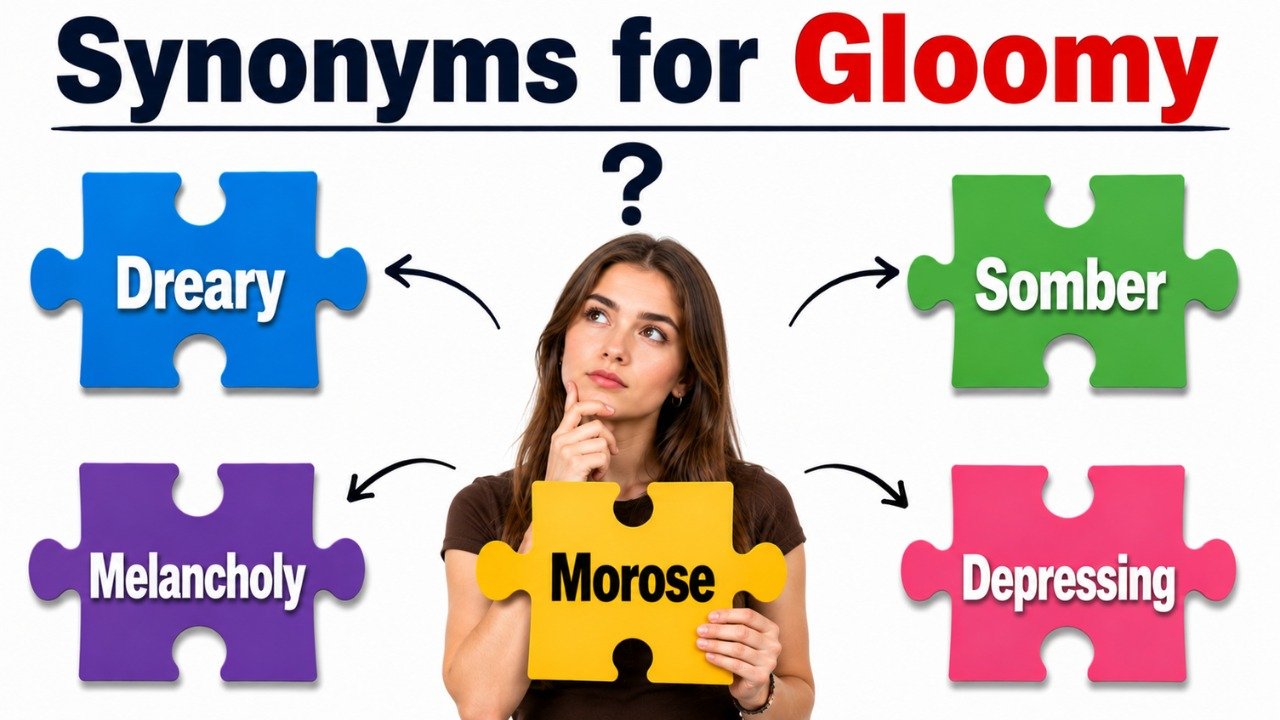
Quick Answer: The best synonyms for gloomy include bleak, somber, dreary, dismal, overcast, melancholy, downcast, grim, cheerless, and depressing. Use overcast for cloudy weather, downcast for a sad person, bleak for a place or situation without hope, somber for a serious mood, and dreary for something dull and unpleasant. In formal writing, somber, melancholy, despondent, and pessimistic work well. In casual conversation, sad, glum, dark, and miserable sound more natural.
Pronunciation and Word Details
Word: Gloomy
Pronunciation: /ˈɡluː.mi/
Part of Speech: Adjective
Meaning: Gloomy describes something dark, sad, depressing, lacking hope, or covered with clouds.
US Pronunciation:
UK Pronunciation:
What Does “Gloomy” Mean?
Gloomy means dark, sad, depressing, or lacking brightness and hope.
The word is an adjective that can describe weather, places, people, expressions, thoughts, predictions, and situations. Its exact meaning changes according to the noun it describes.
When gloomy describes weather, it usually means cloudy, dark, and lacking sunlight. When it describes a person, it suggests sadness, unhappiness, or low spirits. A gloomy room is dark and unwelcoming, while a gloomy prediction suggests that the future may be difficult or unsuccessful.
Weather Context: The sky remained gloomy throughout the afternoon.
Emotional Context: He became gloomy after hearing the disappointing news.
Place Context: The basement felt cold and gloomy.
Future Context: The report offered a gloomy prediction for the coming months.
Tone Context: The novel has a gloomy and serious atmosphere.
Meaning, Tone, and Context of “Gloomy”
Gloomy usually carries a negative, emotional, or serious tone. It suggests darkness, sadness, discomfort, or a lack of hope.
In everyday conversation, gloomy is a common and natural word. People often use it to describe cloudy weather, a sad mood, an unpleasant room, or a negative outlook.
In formal and academic writing, writers may prefer more precise alternatives such as somber, bleak, pessimistic, despondent, or melancholy. These words can communicate a particular type of sadness or negativity more accurately.
Neutral Context: The morning was cloudy and gloomy.
Emotional Context: She felt gloomy after the argument.
Serious Context: The investigation presented a gloomy picture of the situation.
Literary Context: The abandoned house created a gloomy atmosphere.
Formal Context: The report gave a bleak assessment of future growth.
Conversational Context: Everyone seemed a little glum after the team lost.
When and How to Use “Gloomy”
For Cloudy Weather
Use gloomy when the sky is dark, cloudy, and lacking sunlight.
Example: The gloomy weather made the afternoon feel unusually long.
For a Sad Mood
Use gloomy when someone appears unhappy, quiet, or emotionally low.
Example: He looked gloomy after receiving the disappointing result.
For Dark Places
Use gloomy to describe a room, building, street, or landscape that feels dark and unwelcoming.
Example: The narrow hallway was gloomy and poorly lit.
For Negative Predictions
Use gloomy when a prediction or opinion suggests little hope for improvement.
Example: The experts gave a gloomy forecast for the local economy.
For Serious Writing
Use gloomy to create a dark, sad, or unsettling atmosphere in descriptive writing.
Example: The author created a gloomy setting with rain, fog, and empty streets.
For Unpleasant Situations
Use gloomy when a situation feels depressing, discouraging, or without promise.
Example: The future looked gloomy after the project lost its funding.
Best Synonyms for Gloomy
Bleak: Cold, empty, depressing, or lacking hope.
Example: The abandoned village looked bleak during winter.
Somber: Serious, dark, and lacking cheerfulness.
Example: The meeting had a somber mood after the announcement.
Dreary: Dull, unpleasant, and depressing.
Example: They spent a dreary afternoon indoors.
Dismal: Very poor, dark, or depressing.
Example: The team gave a dismal performance.
Overcast: Covered with clouds and lacking sunlight.
Example: The sky remained overcast all morning.
Melancholy: Quietly sad and thoughtful.
Example: The song created a melancholy mood.
Downcast: Looking or feeling sad and discouraged.
Example: She appeared downcast after the interview.
Grim: Serious, worrying, and without much hope.
Example: The latest report presented a grim picture.
Cheerless: Lacking happiness, warmth, or brightness.
Example: The empty room felt cold and cheerless.
Depressing: Causing sadness, disappointment, or hopelessness.
Example: The news was deeply depressing.
50 Synonyms for Gloomy with Short Meanings
- Bleak: Cold, empty, depressing, or without hope.
- Somber: Serious, dark, and lacking cheerfulness.
- Dreary: Dull, unpleasant, and depressing.
- Dismal: Extremely poor, dark, or discouraging.
- Dark: Lacking light or creating a sad atmosphere.
- Overcast: Covered with clouds.
- Cloudy: Filled or covered with clouds.
- Murky: Dark, unclear, or difficult to see through.
- Shadowy: Full of shadows or lacking clear light.
- Dim: Not bright or clearly lit.
- Cheerless: Lacking happiness, warmth, or brightness.
- Depressing: Causing sadness or loss of hope.
- Melancholy: Quietly and thoughtfully sad.
- Sad: Feeling or showing unhappiness.
- Downcast: Sad, discouraged, or looking downward.
- Despondent: Having lost confidence or hope.
- Dejected: Unhappy because of disappointment or failure.
- Miserable: Extremely unhappy or uncomfortable.
- Sorrowful: Full of sadness or grief.
- Mournful: Expressing sadness, loss, or grief.
- Glum: Quietly unhappy and serious.
- Sullen: Bad tempered, silent, and unhappy.
- Morose: Deeply unhappy and unwilling to communicate.
- Pessimistic: Expecting negative results.
- Hopeless: Having no expectation of success or improvement.
- Grim: Serious, unpleasant, and lacking hope.
- Ominous: Suggesting that something bad may happen.
- Foreboding: Creating a feeling that trouble is approaching.
- Dour: Serious, unfriendly, and lacking warmth.
- Lugubrious: Excessively sad, serious, or mournful.
- Blue: Feeling sad or emotionally low.
- Crestfallen: Sad and disappointed after failure.
- Despairing: Showing complete loss of hope.
- Woeful: Full of sadness or suffering.
- Unhappy: Not feeling pleased or satisfied.
- Joyless: Lacking pleasure, happiness, or enjoyment.
- Solemn: Serious and lacking playfulness.
- Funereal: Extremely sad and similar to the mood of a funeral.
- Sunless: Receiving little or no sunlight.
- Clouded: Covered, darkened, or made unclear.
- Misty: Filled with mist and difficult to see through.
- Dingy: Dark, dirty, and unattractive.
- Drab: Dull in color, appearance, or character.
- Dull: Lacking brightness, interest, or excitement.
- Desolate: Empty, lonely, and depressing.
- Oppressive: Uncomfortably heavy, dark, or distressing.
- Heavy: Emotionally serious or difficult.
- Brooding: Dark, thoughtful, and threatening in mood.
- Forlorn: Lonely, abandoned, and unhappy.
- Dispirited: Having lost enthusiasm, confidence, or hope.
Read Also:
Synonyms for Practice

Synonyms for Gloomy by Context
When Gloomy Means Dark or Cloudy
Overcast, cloudy, dark, dim, misty, murky, sunless, and shadowy describe weather or places with little light.
Example: The sky remained overcast throughout the day.
Example: The path disappeared into the misty forest.
Example: The room was dim and difficult to navigate.
When Gloomy Means Sad
Sad, glum, downcast, melancholy, dejected, miserable, and sorrowful describe emotional unhappiness.
Example: She felt downcast after receiving the rejection.
Example: His expression became glum when the event was cancelled.
Example: The music gave her a melancholy feeling.
When Gloomy Means Without Hope
Bleak, hopeless, pessimistic, grim, despondent, despairing, and dispirited suggest that improvement or success is unlikely.
Example: The future looked bleak after the factory closed.
Example: He became despondent after several unsuccessful attempts.
Example: The report offered a grim assessment of the situation.
When Gloomy Means Dull or Unpleasant
Dreary, dismal, cheerless, drab, dingy, dull, and joyless describe places, experiences, or situations that lack color, energy, or pleasure.
Example: The office looked drab and uninviting.
Example: They spent a dreary weekend indoors.
Example: The small apartment felt cheerless during winter.
When Gloomy Means Threatening
Ominous, foreboding, brooding, oppressive, and dark describe an atmosphere that suggests danger or trouble.
Example: Ominous clouds gathered above the hills.
Example: A foreboding silence filled the building.
Example: The forest had a dark and brooding atmosphere.
When Gloomy Means Serious
Somber, solemn, dour, heavy, and funereal describe a serious mood without happiness or lightness.
Example: The speaker adopted a somber tone.
Example: Everyone remained solemn during the ceremony.
Example: A heavy silence followed the announcement.
Another Word for Gloomy
The best general replacement for gloomy is bleak because it can describe weather, places, situations, and future prospects. However, the strongest alternative depends on the intended meaning.
Use overcast for cloudy skies, downcast for a sad person, somber for a serious atmosphere, dreary for a dull experience, and grim for a worrying situation.
Original: The sky looked gloomy this morning.
Better Option: The sky looked overcast this morning.
Original: She seemed gloomy after the meeting.
Better Option: She seemed downcast after the meeting.
Original: The room was gloomy and cold.
Better Option: The room was dim and cheerless.
Original: The report gave a gloomy prediction.
Better Option: The report gave a grim prediction.
When Not to Use “Gloomy”
Gloomy can sound vague when a more precise word would explain the situation better.
Do not use gloomy for every type of sadness. Someone who has lost hope may be despondent, while someone who has experienced disappointment may be dejected.
Avoid using gloomy for all cloudy weather. Overcast is more specific when the sky is fully covered with clouds.
Do not use gloomy when you need to distinguish between physical darkness and emotional sadness.
Weak: The day was gloomy.
Better: The sky was overcast, and the streets received very little sunlight.
Weak: He felt gloomy about the result.
Better: He felt dejected after learning that he had failed.
Weak: The report was gloomy.
Better: The report presented a bleak outlook for the coming year.
Weak: The house looked gloomy.
Better: The house looked dark, empty, and neglected.
Words Commonly Confused With Gloomy
Gloomy vs Sad: Sad mainly describes an emotion. Gloomy can describe emotions, weather, places, predictions, and atmospheres.
Gloomy vs Bleak: Gloomy suggests darkness or sadness. Bleak often suggests emptiness, coldness, or a lack of hope.
Gloomy vs Somber: Gloomy is broadly sad or dark. Somber is more formal and often describes a serious, respectful, or thoughtful mood.
Gloomy vs Dreary: Gloomy focuses on darkness or sadness. Dreary emphasizes dullness, repetition, and lack of interest.
Gloomy vs Overcast: Gloomy can describe many things. Overcast specifically describes a sky covered with clouds.
Gloomy vs Melancholy: Gloomy can feel generally depressing. Melancholy suggests a quiet, reflective form of sadness.
Gloomy vs Ominous: Gloomy describes darkness or unhappiness. Ominous suggests that something bad may happen.
Gloomy vs Grim: Gloomy suggests sadness or darkness. Grim describes something serious, unpleasant, or without hope.
Which Synonym Should You Choose?
Choose overcast when describing a sky completely covered with clouds.
Choose cloudy when the weather contains clouds but may not be completely dark.
Choose bleak when describing a place, situation, or future with little hope.
Choose somber for formal writing about a serious mood, event, or atmosphere.
Choose melancholy when describing quiet, reflective sadness in literature or music.
Choose downcast when a person appears sad or discouraged.
Choose glum for casual conversation about someone who looks unhappy.
Choose dreary when a day, place, or activity feels dull and unpleasant.
Choose grim when describing worrying news, reports, facts, or future conditions.
Choose ominous when an atmosphere suggests approaching danger.
Choose dejected when disappointment or failure has caused sadness.
Choose despondent when someone has lost hope or confidence.
Choose drab when colors, clothing, buildings, or surroundings look dull.
Choose cheerless when a place or experience lacks warmth and happiness.
Choose pessimistic when someone expects an unfavorable result.
Real Life Examples of “Gloomy” in Sentences
Original: The weather was gloomy all weekend.
Better Option: The weather was overcast all weekend.
Original: He looked gloomy after the examination.
Better Option: He looked dejected after the examination.
Original: The old building had a gloomy interior.
Better Option: The old building had a dark and cheerless interior.
Original: She gave a gloomy prediction about the project.
Better Option: She gave a pessimistic prediction about the project.
Original: The village appeared gloomy during winter.
Better Option: The village appeared bleak during winter.
Original: The story created a gloomy atmosphere.
Better Option: The story created a somber atmosphere.
Original: It was a gloomy afternoon with nothing to do.
Better Option: It was a dreary afternoon with nothing to do.
Original: His gloomy expression worried his family.
Better Option: His downcast expression worried his family.
Original: The report presented a gloomy view of the future.
Better Option: The report presented a grim view of the future.
Original: Dark clouds gave the sky a gloomy appearance.
Better Option: Ominous clouds gave the sky a threatening appearance.
Synonym Groups and Usage Differences
Weather and Light Group
Overcast, cloudy, dark, dim, misty, shadowy, murky, and sunless describe limited light or poor visibility.
Use overcast for cloud covered skies, dim for weak lighting, and murky for dark or unclear surroundings.
Example: The sky was overcast, and the room remained dim throughout the morning.
Sadness Group
Sad, melancholy, downcast, glum, sorrowful, mournful, and unhappy describe emotional pain or low spirits.
Use melancholy for thoughtful sadness, downcast for visible disappointment, and glum for casual descriptions.
Example: He looked glum after hearing the disappointing news.
Hopelessness Group
Bleak, hopeless, despondent, despairing, pessimistic, and dispirited describe a lack of hope or confidence.
Use bleak for situations, despondent for people, and pessimistic for negative expectations.
Example: The repeated failures left the team dispirited.
Dullness Group
Dreary, dismal, drab, dingy, dull, cheerless, and joyless describe something lacking color, interest, or pleasure.
Use dreary for experiences, drab for appearance, and dingy for dark or dirty places.
Example: The waiting room was drab and cheerless.
Serious Mood Group
Somber, solemn, dour, heavy, grim, and funereal describe a serious atmosphere without lightness or joy.
Use somber for respectful seriousness, grim for disturbing facts, and dour for an unfriendly expression.
Example: A somber mood filled the hall after the announcement.
Threatening Atmosphere Group
Ominous, foreboding, brooding, oppressive, and dark suggest approaching danger, tension, or discomfort.
Use ominous when warning signs are present and foreboding when someone senses that trouble may occur.
Example: The brooding clouds created a sense of foreboding.
Antonyms of Gloomy
The opposite of gloomy depends on whether the word describes weather, emotion, atmosphere, or future expectations.
Bright: Filled with strong light or cheerful energy.
Sunny: Receiving sunlight or showing happiness.
Cheerful: Noticeably happy and positive.
Joyful: Full of happiness and pleasure.
Hopeful: Expecting a positive result.
Optimistic: Believing that good things are likely to happen.
Lively: Full of energy, activity, and excitement.
Radiant: Bright, glowing, or visibly happy.
Pleasant: Enjoyable, comfortable, or agreeable.
Colorful: Full of bright and varied colors.
Encouraging: Giving confidence or hope.
Upbeat: Positive, cheerful, and confident.
Lighthearted: Relaxed, cheerful, and free from worry.
Welcoming: Friendly, pleasant, and inviting.
Clear: Free from clouds, darkness, or confusion.
Comparison Between Gloomy and Related Words
Gloomy vs Bleak
Gloomy suggests darkness, sadness, or depression. Bleak adds a stronger sense of emptiness, coldness, or hopelessness.
Example With Gloomy: The cloudy morning felt gloomy.
Example With Bleak: The future looked bleak after the business closed.
Gloomy vs Somber
Gloomy is a general word for sadness or darkness. Somber is more formal and often describes a serious or respectful atmosphere.
Example With Gloomy: He was gloomy after receiving the result.
Example With Somber: The audience remained somber during the speech.
Gloomy vs Dreary
Gloomy emphasizes sadness or lack of light. Dreary emphasizes dullness, boredom, and unpleasant repetition.
Example With Gloomy: The dark clouds made the town look gloomy.
Example With Dreary: The long meeting became dreary.
Gloomy vs Melancholy
Gloomy suggests a generally negative or depressing mood. Melancholy describes quiet, thoughtful sadness.
Example With Gloomy: She felt gloomy all afternoon.
Example With Melancholy: The old photograph filled her with melancholy.
Gloomy vs Overcast
Gloomy can describe people, places, weather, or situations. Overcast specifically refers to a sky covered with clouds.
Example With Gloomy: It was a gloomy winter morning.
Example With Overcast: The sky was overcast before the rain began.
Gloomy vs Grim
Gloomy suggests sadness or darkness. Grim suggests seriousness, danger, or a lack of hope.
Example With Gloomy: The empty office felt gloomy.
Example With Grim: The report revealed a grim financial situation.
Gloomy vs Ominous
Gloomy describes something dark or depressing. Ominous suggests a warning that something bad may happen.
Example With Gloomy: The forest looked gloomy after sunset.
Example With Ominous: A sudden silence created an ominous atmosphere.
Common Phrases and Expressions With “Gloomy”
Gloomy Weather: Dark, cloudy weather with little sunlight.
Gloomy Mood: A sad, negative, or unhappy emotional state.
Gloomy Outlook: A pessimistic view of the future.
Gloomy Forecast: A prediction that suggests poor conditions or negative results.
Gloomy Atmosphere: A dark, sad, or depressing feeling in a place.
Gloomy Expression: A face that shows sadness or discouragement.
Gloomy Room: A dark and unwelcoming indoor space.
Gloomy Day: A cloudy or emotionally unpleasant day.
Gloomy Thoughts: Negative, sad, or discouraging ideas.
Gloomy Prediction: A statement suggesting that future events may be unfavorable.
Common Mistakes to Avoid
A common mistake is using gloomy as a replacement for every word connected with sadness. Different synonyms describe different emotional states. Dejected suggests disappointment, despondent suggests lost hope, and melancholy suggests quiet sadness.
Another mistake is using gloomy when discussing only cloud coverage. Overcast is usually more precise for weather reports and factual descriptions.
Avoid repeating gloomy several times in one paragraph. Use alternatives such as bleak, somber, dreary, downcast, or grim to improve clarity and variety.
Do not confuse gloomy with ominous. A gloomy place may simply feel dark or sad, while an ominous place creates a sense that danger is approaching.
Writers should also avoid vague sentences such as the situation was gloomy. Explain whether the situation was bleak, discouraging, serious, or hopeless.
Conclusion
The best synonyms for gloomy depend on whether you are describing weather, emotions, places, or future expectations. Use overcast for cloudy skies, downcast for a sad person, bleak for hopeless situations, somber for a serious tone, and dreary for dull experiences. Grim, melancholy, cheerless, glum, and pessimistic provide additional shades of meaning. Understanding these differences makes your writing clearer, more expressive, and more accurate. These synonyms for gloomy can improve essays, stories, descriptions, reports, and everyday conversations.
FAQs About Synonyms for Gloomy
What Is the Best Synonym for Gloomy?
Bleak is a strong general synonym. However, overcast is better for weather, while downcast is better for a sad person.
What Is a Formal Synonym for Gloomy?
Somber, melancholy, despondent, pessimistic, and bleak are suitable choices for formal writing.
What Is Another Word for Gloomy Weather?
Overcast, cloudy, dark, sunless, dreary, and misty can describe gloomy weather.
What Is a Synonym for a Gloomy Person?
Downcast, glum, dejected, morose, despondent, and dispirited can describe a gloomy person.
Are Gloomy and Sad the Same?
They are related, but gloomy has a broader meaning. It can describe sadness, dark weather, unpleasant places, or negative predictions.
What Is the Opposite of Gloomy?
Common opposites include bright, sunny, cheerful, joyful, hopeful, optimistic, and upbeat.
Which Synonym Is Best for Gloomy Writing?
Somber works well for a serious tone, melancholy for reflective sadness, and bleak for hopeless or desolate situations.
