
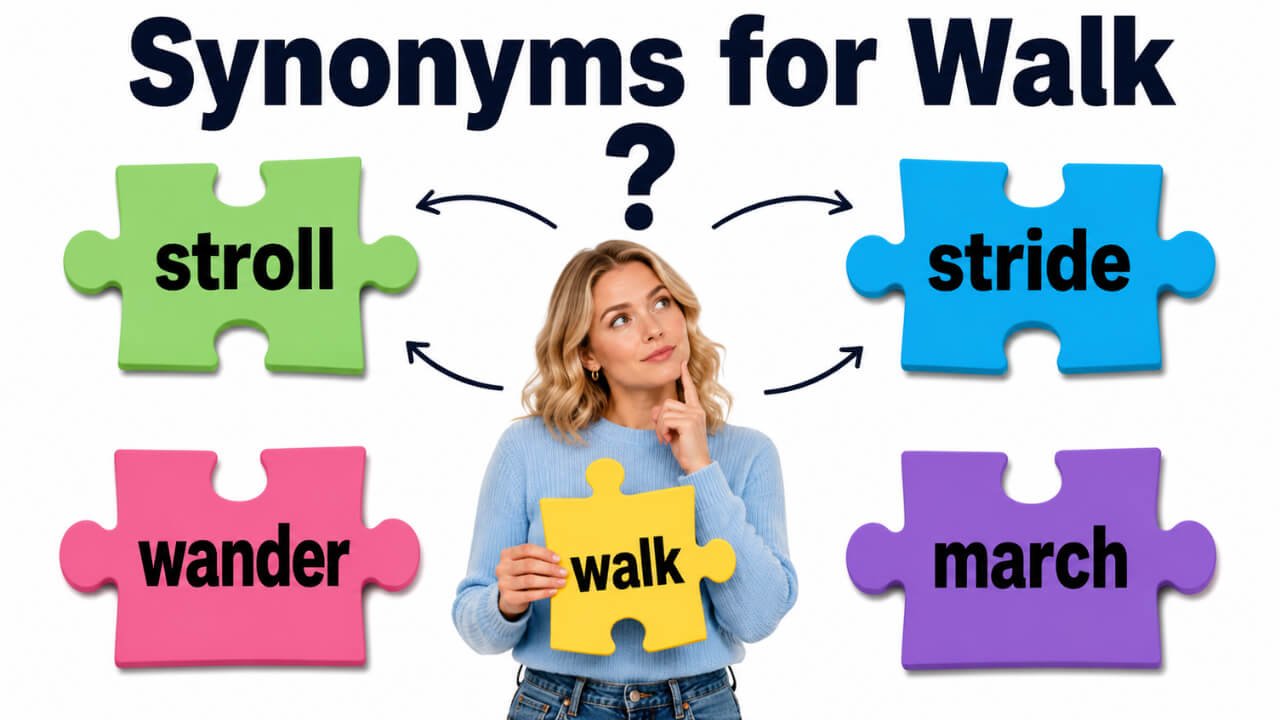
Quick Answer: Synonyms for walk include stroll, stride, wander, roam, amble, saunter, march, pace, hike, and trudge. The best synonym depends on context. Use stroll for relaxed movement, stride for confident walking, wander for walking without a fixed direction, march for organized or forceful movement, hike for long outdoor walking, and trudge for slow tired walking.
Pronunciation and Word Details
Word: Walk
Pronunciation: /wɔːk/
Part of Speech: Verb and noun
Meaning: To move on foot at a regular pace without running.
US Pronunciation:
UK Pronunciation:
What Does “Walk” Mean?
Walk means to move from one place to another on foot at a normal pace. It is used as both a verb and a noun.
As a verb, walk describes the action of moving with your feet. For example, someone can walk to school, walk across a room, or walk slowly down a street. As a noun, walk can mean the activity itself, such as a morning walk, a short walk, or a long walk.
The word can also describe style, direction, purpose, or mood. A person may stroll for pleasure, stride with confidence, trudge with tiredness, or wander without a clear destination.
Meaning, Tone, and Context of “Walk”
Walk is a neutral, common, and highly useful word. It works in casual speech, formal writing, instructions, stories, reports, and everyday conversation.
The tone changes when you choose a synonym. Stroll sounds relaxed and pleasant. Stride sounds confident and strong. March sounds firm, organized, or military. Trudge sounds tired or difficult. Wander sounds free, aimless, or thoughtful. Hike suggests outdoor walking, often over a long distance or rough ground.
In formal writing, proceed, advance, traverse, or travel on foot may sound more precise. In casual conversation, stroll, wander, roam, and walk around often sound natural.
When and How to Use “Walk”
For Normal Movement: Use walk when you simply mean moving on foot.
Example: We walk to the market every evening.
For Relaxed Movement: Use stroll, amble, or saunter when the walk is slow and pleasant.
Example: They strolled through the garden after dinner.
For Confident Movement: Use stride when someone walks with purpose or confidence.
Example: She strode into the room with a calm expression.
For Tired Movement: Use trudge or plod when walking feels slow, heavy, or difficult.
Example: The hikers trudged back to camp after sunset.
For Aimless Movement: Use wander, roam, or meander when there is no fixed route.
Example: He wandered through the old streets for hours.
For Long Outdoor Movement: Use hike or trek when the walk is long, often in nature.
Example: They hiked across the hills in the morning.
For Formal Movement: Use proceed, advance, or traverse when writing in a serious or technical style.
Example: The group proceeded along the marked path.
Best Synonyms for Walk
Stroll: To walk slowly and comfortably for pleasure.
Example: We strolled beside the lake after lunch.
Stride: To walk with long confident steps.
Example: He strode across the stage to accept the award.
Wander: To walk without a clear direction or fixed plan.
Example: She wandered around the city and enjoyed the quiet streets.
Roam: To move around freely over an area.
Example: The children roamed through the park all afternoon.
Amble: To walk slowly and peacefully.
Example: They ambled down the country lane.
Saunter: To walk in a relaxed and unhurried way.
Example: He sauntered into the café like he had all day.
March: To walk with firm, regular steps, often in a group.
Example: The students marched across the field in neat lines.
Pace: To walk back and forth, often because of worry or thought.
Example: She paced outside the office before the interview.
Hike: To walk a long distance, especially outdoors.
Example: We hiked through the forest before noon.
Trudge: To walk slowly and heavily because of tiredness or difficulty.
Example: He trudged home through the rain.
50 Synonyms for Walk with Short Meanings
1. Stroll: A slow and pleasant walk.
2. Stride: A confident walk with long steps.
3. Wander: To walk without a fixed direction.
4. Roam: To walk freely around an area.
5. Amble: To walk slowly and calmly.
6. Saunter: To walk in a relaxed way.
7. March: To walk with firm regular steps.
8. Pace: To walk back and forth repeatedly.
9. Hike: To walk a long distance outdoors.
10. Trudge: To walk slowly with effort.
11. Plod: To walk heavily and slowly.
12. Shuffle: To walk by dragging the feet.
13. Limp: To walk unevenly because of pain or injury.
14. Hobble: To walk with difficulty.
15. Tread: To step or walk on a surface.
16. Step: To move by lifting and placing the foot.
17. Traipse: To walk around, often tiredly or casually.
18. Meander: To walk in a winding or indirect way.
19. Ramble: To walk for pleasure, often without a strict route.
20. Promenade: To walk publicly or leisurely.
21. Perambulate: To walk through or around a place formally.
22. Patrol: To walk around an area to watch or guard it.
23. Advance: To move forward.
24. Proceed: To continue moving forward.
25. Traverse: To walk across or through an area.
26. Cross: To walk from one side to another.
27. Travel: To go from one place to another.
28. Journey: To travel, often over a longer distance.
29. Move: To change position or location.
30. Go: To move or travel somewhere.
31. Trek: To walk a long and difficult route.
32. Tramp: To walk heavily or for a long distance.
33. Mosey: To walk slowly in a casual way.
34. Toddle: To walk with small unsteady steps.
35. Waddle: To walk with short side to side movements.
36. Tiptoe: To walk quietly on the toes.
37. Stomp: To walk with heavy loud steps.
38. Stagger: To walk unsteadily.
39. Stalk: To walk stiffly, angrily, or quietly after someone.
40. Creep: To walk slowly and quietly.
41. Sneak: To walk quietly to avoid notice.
42. Parade: To walk in a public or organized display.
43. Process: To walk formally in a line or ceremony.
44. Make your way: To move toward a place.
45. Go on foot: To travel by walking.
46. Walk around: To move through or around a place on foot.
47. Walk along: To continue walking beside or on something.
48. Walk past: To pass something while walking.
49. Walk over: To go to someone or something on foot.
50. Take a walk: To go walking, usually for exercise or pleasure.
Read Also:
Synonyms for Fake
Synonyms for Walk by Context
When Walk Means Move on Foot
Useful Synonyms: Step, tread, go on foot, move, proceed.
Example: She walked to the bus stop.
Better Option: She went on foot to the bus stop.
When Walk Means Move Slowly
Useful Synonyms: Stroll, amble, saunter, mosey.
Example: They walked through the quiet garden.
Better Option: They strolled through the quiet garden.
When Walk Means Move Confidently
Useful Synonyms: Stride, advance, march, proceed.
Example: He walked into the meeting with confidence.
Better Option: He strode into the meeting with confidence.
When Walk Means Move Without Direction
Useful Synonyms: Wander, roam, ramble, meander.
Example: She walked around the town with no plan.
Better Option: She wandered around the town with no plan.
When Walk Means Move With Difficulty
Useful Synonyms: Trudge, plod, limp, hobble, shuffle.
Example: He walked home after a long day.
Better Option: He trudged home after a long day.
When Walk Means Long Outdoor Travel
Useful Synonyms: Hike, trek, tramp, ramble.
Example: We walked through the mountains.
Better Option: We hiked through the mountains.
Another Word for Walk
Another Word: The best single replacement for walk is stroll when the meaning is relaxed movement on foot. However, the best alternative depends on context. Use stride for confidence, wander for aimless movement, hike for outdoor distance, and trudge for tired movement.
Original: We walked through the park after lunch.
Better Option: We strolled through the park after lunch.
Original: She walked into the office confidently.
Better Option: She strode into the office confidently.
Original: He walked around the city without a plan.
Better Option: He wandered around the city without a plan.
Original: They walked up the mountain trail.
Better Option: They hiked up the mountain trail.
When Not to Use “Walk”
Do not use walk when a more exact word would show pace, emotion, purpose, or condition better. Walk is clear, but it can be too general in descriptive writing. If the sentence needs mood, choose a stronger synonym.
Weak: He walked into the room angrily.
Better: He stormed into the room angrily.
Weak: She walked slowly by the river.
Better: She strolled by the river.
Weak: The tired workers walked home.
Better: The tired workers trudged home.
Weak: He walked across the stage with confidence.
Better: He strode across the stage with confidence.
Weak: They walked for three days through the forest.
Better: They trekked for three days through the forest.
Words Commonly Confused With Walk
Walk vs Stroll: Walk is general movement on foot, while stroll means a slow and relaxed walk.
Example: We walked to the shop, then strolled through the park.
Walk vs Hike: Walk can happen anywhere, while hike usually means a longer outdoor walk, often on trails or rough ground.
Example: We walked to the café, but we hiked through the hills.
Walk vs Wander: Walk can have a clear destination, while wander suggests no fixed direction.
Example: She walked to work, then wandered through the market.
Walk vs Stride: Walk is neutral, while stride suggests confidence, energy, or long steps.
Example: He walked down the hall, but the manager strode into the room.
Walk vs March: Walk is ordinary movement, while march is firm, regular, and often organized.
Example: The group walked to the field, then marched in rows.
Walk vs Trudge: Walk is neutral, while trudge suggests tiredness, weight, or difficulty.
Example: We walked to the station, but he trudged home in the rain.
Which Synonym Should You Choose?
Choose stroll when writing about a slow, pleasant, relaxed walk.
Choose stride when describing confidence, long steps, or purposeful movement.
Choose wander when someone walks without a plan, route, or clear goal.
Choose roam when someone moves freely across a wide area.
Choose amble when the movement is slow, gentle, and peaceful.
Choose saunter when the person walks casually and without hurry.
Choose march when the walking is firm, organized, or disciplined.
Choose pace when someone walks back and forth because of worry, thought, or impatience.
Choose hike when writing about long outdoor walking, especially on trails or hills.
Choose trudge when the walking is slow, heavy, and tired.
Choose proceed for formal writing, instructions, reports, or serious explanations.
Choose traverse when writing about crossing or moving through an area.
Real Life Examples of “Walk” in Sentences
Original: We walked through the neighborhood after dinner.
Better Option: We strolled through the neighborhood after dinner.
Original: She walked into the classroom with confidence.
Better Option: She strode into the classroom with confidence.
Original: He walked around the mall for an hour.
Better Option: He wandered around the mall for an hour.
Original: The soldiers walked across the field.
Better Option: The soldiers marched across the field.
Original: I walked back home in the rain.
Better Option: I trudged back home in the rain.
Original: They walked through the forest trail.
Better Option: They hiked through the forest trail.
Original: The guard walked around the building at night.
Better Option: The guard patrolled the building at night.
Original: She walked back and forth before the exam.
Better Option: She paced back and forth before the exam.
Original: The child walked with tiny unsteady steps.
Better Option: The child toddled with tiny unsteady steps.
Original: He walked quietly into the room.
Better Option: He crept quietly into the room.
Synonym Groups and Usage Differences
Relaxed Walking Group
Use: Stroll, amble, saunter, and mosey describe slow, easy, and comfortable walking. These words are useful when the movement feels peaceful or casual.
Example: They strolled along the river at sunset.
Confident Walking Group
Use: Stride, advance, and proceed show purpose, direction, or confidence. These words are stronger than walk and work well in stories, speeches, and formal writing.
Example: She strode toward the stage without hesitation.
Aimless Walking Group
Use: Wander, roam, ramble, and meander suggest walking without a strict plan. They are useful for travel writing, storytelling, and emotional scenes.
Example: He wandered through the streets, enjoying the silence.
Difficult Walking Group
Use: Trudge, plod, shuffle, limp, and hobble show tiredness, weakness, injury, or effort. These words add physical detail and emotion.
Example: The old man hobbled toward the bench.
Outdoor Walking Group
Use: Hike, trek, tramp, and ramble describe longer walks, often outdoors. Hike is common for trails, while trek suggests a longer or harder journey.
Example: They trekked across the valley before sunset.
Quiet Walking Group
Use: Tiptoe, creep, and sneak describe walking quietly. Tiptoe is careful, creep is slow and silent, and sneak suggests avoiding attention.
Example: She tiptoed past the sleeping baby.
Antonyms of Walk
Run: To move faster than walking.
Stop: To no longer move.
Stand: To remain upright without moving forward.
Sit: To rest on a seat instead of moving.
Stay: To remain in one place.
Ride: To travel in or on a vehicle or animal instead of walking.
Drive: To travel by controlling a vehicle.
Fly: To travel through the air rather than on foot.
Rush: To move quickly, often faster than a normal walk.
Sprint: To run at full speed for a short distance.
Comparison: Walk vs Related Words
Walk vs Stroll
Difference: Walk is the general word for moving on foot. Stroll means walking slowly for pleasure.
Example With Walk: We walked to the park.
Example With Stroll: We strolled through the park.
Walk vs Stride
Difference: Walk is neutral, while stride shows confidence, energy, or long steps.
Example With Walk: She walked into the room.
Example With Stride: She strode into the room.
Walk vs Wander
Difference: Walk may have a clear purpose, while wander suggests moving without a fixed plan.
Example With Walk: He walked to the station.
Example With Wander: He wandered through the station.
Walk vs Hike
Difference: Walk can be short or ordinary. Hike usually means a longer outdoor walk.
Example With Walk: We walked around the block.
Example With Hike: We hiked along the mountain trail.
Walk vs March
Difference: Walk is ordinary movement, while march is firm, regular, and organized.
Example With Walk: The students walked to the hall.
Example With March: The students marched to the hall.
Walk vs Trudge
Difference: Walk is neutral, while trudge shows tiredness or difficulty.
Example With Walk: He walked home.
Example With Trudge: He trudged home.
Common Phrases and Expressions With Walk
Walk Away: To leave a place, person, or problem.
Walk Around: To move through or around an area on foot.
Walk Back: To return by walking or take back a statement.
Walk By: To pass someone or something while walking.
Walk Into: To enter a place on foot.
Walk Out: To leave suddenly or in protest.
Walk Through: To guide someone step by step through a process.
Take a Walk: To go walking for exercise, air, or relaxation.
Go for a Walk: To walk for pleasure or health.
Walk the Dog: To take a dog outside for exercise.
Common Mistakes to Avoid
A common mistake is using walk too many times in one paragraph. Repetition makes writing sound flat. Replace some uses with stroll, stride, wander, hike, or trudge when the meaning is clear.
Another mistake is choosing a synonym that changes the meaning too much. Stroll is not right for fast or difficult movement. Trudge is not right for a pleasant walk. March sounds too forceful for normal walking.
Also avoid vague descriptions. Instead of saying someone walked slowly, you can say they ambled, sauntered, shuffled, or plodded, depending on the exact mood.
Conclusion
Synonyms for walk help you describe movement with more detail, emotion, and accuracy. Use stroll for relaxed walking, stride for confident movement, wander for aimless walking, hike for outdoor distance, march for organized steps, and trudge for tired movement. The word walk is clear and useful, but choosing the right synonym can make your sentence more natural, vivid, and specific.
FAQs About Synonyms for Walk
What is the best synonym for walk?
Answer: The best synonym for walk is stroll when you mean a slow and relaxed walk. For confident walking, use stride. For long outdoor walking, use hike.
What is another word for walking slowly?
Answer: Good words for walking slowly include strolling, ambling, sauntering, plodding, and shuffling. The best choice depends on whether the walk is pleasant, tired, or difficult.
What is a formal synonym for walk?
Answer: Formal synonyms for walk include proceed, advance, traverse, and perambulate. Use them in reports, instructions, formal descriptions, or academic style.
What is a synonym for walk confidently?
Answer: Stride is the best synonym for walking confidently. It suggests long steps, purpose, and self assurance.
What is a synonym for walk without direction?
Answer: Wander is the best word for walking without a clear direction. Roam, ramble, and meander can also work.
What is a synonym for a long walk?
Answer: Hike and trek are strong synonyms for a long walk. Use hike for outdoor trails and trek for a longer or more difficult journey.
Is walk formal or informal?
Answer: Walk is neutral. It works in both formal and informal writing. For more specific formal writing, use proceed, traverse, or travel on foot.
