
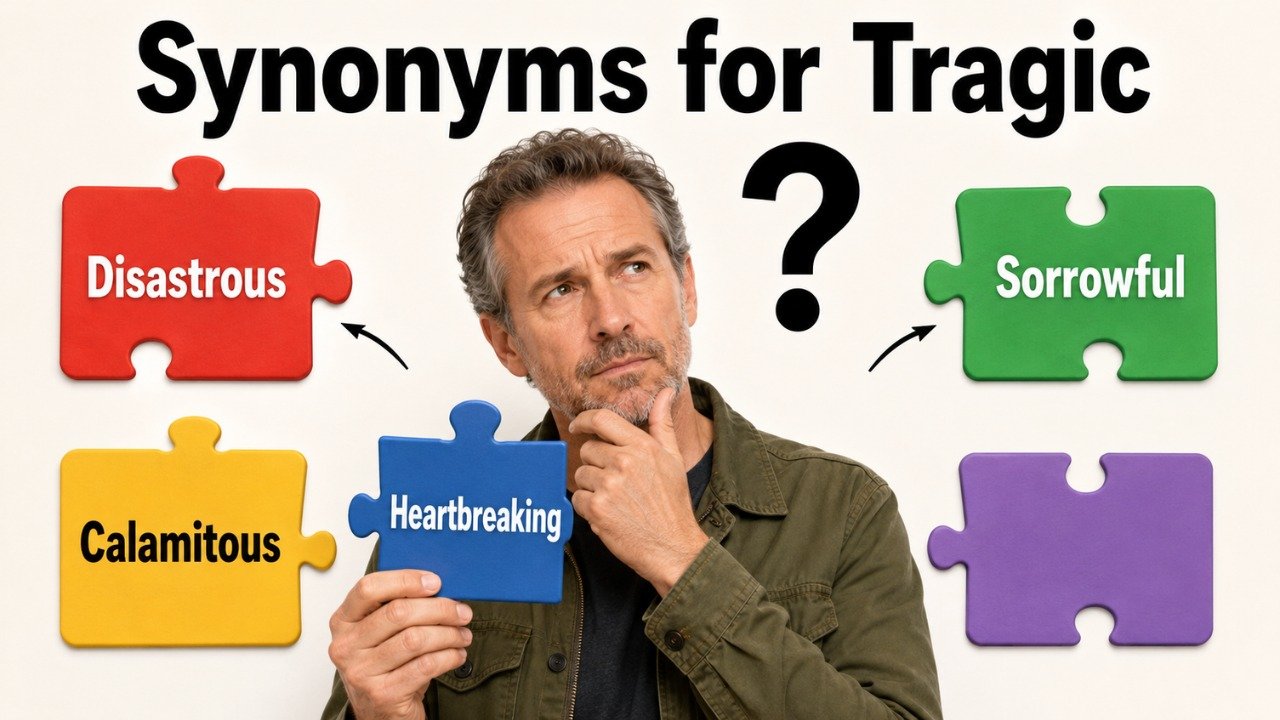
Quick Answer: The best synonyms for tragic include devastating, heartbreaking, disastrous, catastrophic, calamitous, grievous, sorrowful, fatal, lamentable, and distressing. Use heartbreaking for emotional loss, devastating for severe personal or practical damage, and catastrophic for a disaster with enormous consequences. Fatal is best when death occurs, while grievous suits serious harm or sorrow. Lamentable and regrettable work well in formal writing when describing an unfortunate decision, result, or situation.
Pronunciation and Word Details
Word: Tragic
Pronunciation: /ˈtrædʒ.ɪk/
Part of Speech: Adjective
Meaning: Causing extreme sadness, suffering, destruction, or death.
US Pronunciation:
UK Pronunciation:
What Does “Tragic” Mean?
Tragic means causing or involving extreme sadness, suffering, destruction, or death. It is an adjective commonly used to describe accidents, losses, events, stories, decisions, consequences, and human experiences.
A tragic event usually has serious and painful results. For example, a natural disaster may be tragic because it destroys homes and causes loss of life. A personal experience may be tragic when it involves grief, separation, illness, or an unexpected death.
The word also has a literary meaning. In literature and drama, tragic describes a story in which a central character experiences suffering, downfall, or disaster. A tragic hero may possess admirable qualities but is eventually defeated by a personal weakness, difficult choice, or unavoidable circumstance.
Tragic can describe emotional pain, physical destruction, fatal outcomes, or deeply regrettable situations. The surrounding context determines which meaning is most important.
Meaning, Tone, and Context of “Tragic”
Tragic has a serious, emotional, and strongly negative tone. It suggests far more than ordinary sadness or disappointment. The word is normally reserved for events that involve profound suffering, major loss, severe damage, or death.
In everyday conversation, tragic may describe a heartbreaking personal experience, such as the unexpected loss of a family member. In news and formal reports, it may refer to a fatal accident, destructive disaster, or serious public emergency.
In academic and literary writing, tragic can describe characters, themes, flaws, endings, and dramatic structures. A tragic story often explores grief, fate, responsibility, sacrifice, conflict, and human weakness.
The word should be used carefully because it carries emotional weight. Calling a minor inconvenience tragic may sound exaggerated or insensitive when compared with genuine suffering.
When and How to Use “Tragic”
For Personal Loss: Use tragic when an event causes profound grief or emotional suffering.
Example: The family struggled to accept the tragic loss of their youngest son.
For Fatal Events: Use tragic when an accident or incident results in death.
Example: The investigation examined the circumstances surrounding the tragic accident.
For Major Disasters: Use tragic when an event causes widespread destruction, injury, or suffering.
Example: The earthquake had tragic consequences for the entire region.
For Painful Outcomes: Use tragic when a decision or situation ends in severe harm or failure.
Example: A simple misunderstanding led to a tragic outcome.
For Literature: Use tragic to describe a character, story, flaw, or ending involving suffering and downfall.
Example: The main character’s pride becomes his tragic flaw.
For Serious Regret: Use tragic when a preventable mistake produces terrible consequences.
Example: The failure to act quickly proved to be a tragic mistake.
For Historical Events: Use tragic when discussing periods marked by death, injustice, suffering, or destruction.
Example: The memorial honors those affected by the tragic events of the conflict.
For Emotional Storytelling: Use tragic when a story creates deep sympathy, grief, or emotional pain.
Example: The novel follows a tragic love story shaped by duty and separation.
Best Synonyms for Tragic
Devastating: Causing severe emotional pain, damage, or destruction.
Example: The diagnosis was devastating for the entire family.
Heartbreaking: Causing intense sadness or emotional suffering.
Example: The documentary tells a heartbreaking story of loss and courage.
Disastrous: Producing extremely harmful or unsuccessful results.
Example: The poorly planned journey had disastrous consequences.
Catastrophic: Causing enormous damage, failure, or suffering.
Example: The flood had a catastrophic effect on nearby communities.
Calamitous: Involving a great disaster or serious misfortune.
Example: The kingdom faced a calamitous period of famine and conflict.
Grievous: Causing severe pain, injury, sorrow, or harm.
Example: The community mourned a grievous loss.
Sorrowful: Filled with or expressing deep sadness.
Example: She gave a sorrowful account of the final days of the village.
Fatal: Causing death or complete failure.
Example: A fatal error in judgment changed the course of the expedition.
Lamentable: Deserving regret, disappointment, or sorrow.
Example: The destruction of the historic building was lamentable.
Distressing: Causing worry, pain, sadness, or emotional discomfort.
Example: The report contained distressing details about the incident.
50 Synonyms for Tragic with Short Meanings
- Devastating: Causing severe damage, grief, or emotional pain.
- Heartbreaking: Producing intense sadness or sympathy.
- Disastrous: Resulting in great harm, failure, or destruction.
- Catastrophic: Causing enormous and often sudden damage.
- Calamitous: Involving serious disaster or misfortune.
- Fatal: Resulting in death or complete failure.
- Deadly: Able to cause or involving death.
- Grievous: Extremely serious, painful, or sorrowful.
- Sorrowful: Filled with deep sadness.
- Mournful: Expressing grief, sadness, or loss.
- Lamentable: Deserving sorrow, regret, or disappointment.
- Pitiful: Causing sympathy because of suffering or misfortune.
- Unfortunate: Involving bad luck or an undesirable result.
- Regrettable: Deserving regret because of a poor outcome.
- Distressing: Causing anxiety, sadness, or emotional pain.
- Painful: Causing physical or emotional suffering.
- Harrowing: Extremely disturbing, frightening, or upsetting.
- Shocking: Causing sudden surprise, horror, or distress.
- Terrible: Extremely bad, serious, or upsetting.
- Dreadful: Causing fear, suffering, or deep unhappiness.
- Awful: Extremely unpleasant, harmful, or distressing.
- Appalling: Shockingly bad or disturbing.
- Ruinous: Causing destruction, collapse, or severe loss.
- Destructive: Causing serious damage or harm.
- Dire: Extremely serious, urgent, or dangerous.
- Grim: Harsh, depressing, or lacking hope.
- Bleak: Offering little hope or comfort.
- Somber: Serious, dark, and filled with sadness.
- Woeful: Full of misery, sorrow, or serious trouble.
- Wretched: Extremely unhappy, painful, or unpleasant.
- Miserable: Causing or experiencing great unhappiness.
- Saddening: Making someone feel sorrow or disappointment.
- Tearful: Filled with tears, grief, or strong sadness.
- Melancholy: Quietly and deeply sad.
- Depressing: Causing unhappiness, hopelessness, or discouragement.
- Traumatic: Causing lasting emotional or psychological distress.
- Crushing: Producing overwhelming disappointment or grief.
- Shattering: Causing extreme emotional shock or destruction.
- Overwhelming: Too powerful or painful to manage easily.
- Irreparable: Damaged so severely that it cannot be repaired.
- Doomed: Certain or likely to end in failure or destruction.
- Ill Fated: Destined to experience failure, suffering, or disaster.
- Hapless: Unfortunate and repeatedly affected by bad luck.
- Fateful: Having serious and lasting consequences.
- Unlucky: Experiencing or causing unfortunate results.
- Cataclysmic: Causing sudden and extensive destruction.
- Heartrending: Causing intense emotional pain and sympathy.
- Pitiable: Deserving sympathy because of suffering or weakness.
- Doleful: Expressing deep sadness or grief.
- Anguishing: Causing severe emotional or physical pain.
Read Also:
Synonyms for Embarrassed

Synonyms for Tragic by Context
When Tragic Means Deeply Sad
Heartbreaking, sorrowful, mournful, heartrending, saddening, melancholy, doleful, and tearful describe events or experiences that cause intense sadness.
Heartbreaking is especially suitable for emotional stories involving love, family, separation, illness, or death. Sorrowful and mournful often describe a person’s expression, voice, words, or emotional state.
Example: The family shared a heartbreaking account of their loss.
Example: A mournful silence filled the room after the announcement.
Example: The poem offers a sorrowful reflection on separation.
When Tragic Means Disastrous
Disastrous, catastrophic, calamitous, cataclysmic, ruinous, and destructive describe events that cause major damage or failure.
Catastrophic and cataclysmic are strong choices for widespread destruction. Disastrous can describe both physical events and failed plans. Ruinous often emphasizes severe financial, social, or structural damage.
Example: The storm had catastrophic consequences for the coastal region.
Example: The decision proved disastrous for the entire project.
Example: Years of conflict had a ruinous effect on the local economy.
When Tragic Means Fatal
Fatal, deadly, doomed, and ill fated are useful when an event involves death or an unavoidable destructive ending.
Fatal directly means causing death. Deadly describes something capable of killing. Doomed suggests that failure or destruction is certain. Ill fated describes a person, plan, relationship, or journey that ends badly.
Example: The driver suffered fatal injuries during the accident.
Example: The explorers began an ill fated journey across the mountains.
Example: Without immediate help, the mission appeared doomed.
When Tragic Means Deeply Regrettable
Lamentable, regrettable, unfortunate, pitiful, and appalling describe situations that deserve regret, criticism, sadness, or sympathy.
Lamentable is formal and often describes poor decisions, neglected responsibilities, or preventable losses. Regrettable is milder and works well in professional communication. Unfortunate is polite and restrained.
Example: The destruction of the ancient documents was lamentable.
Example: The delay was unfortunate but unavoidable.
Example: Their failure to protect the children was appalling.
When Tragic Means Emotionally Disturbing
Harrowing, distressing, traumatic, shocking, crushing, shattering, and anguishing emphasize severe emotional suffering.
Harrowing often describes an experience that is frightening and painful. Traumatic suggests lasting emotional harm. Crushing and shattering describe overwhelming grief, disappointment, or loss.
Example: The survivors described a harrowing escape from the fire.
Example: Losing her home was a traumatic experience.
Example: The unexpected announcement was crushing for the team.
When Tragic Describes a Dark Situation
Grim, bleak, dire, somber, wretched, and woeful describe situations with little hope, comfort, or happiness.
Grim emphasizes harsh reality. Bleak suggests a lack of hope. Dire refers to an extremely serious or urgent situation. Somber describes a serious and sad mood.
Example: The report presented a grim picture of the coming winter.
Example: Without additional supplies, the situation looked bleak.
Example: The village faced a dire shortage of clean water.
Another Word for Tragic
Devastating is often the best general replacement for tragic because it can describe emotional loss, destructive events, serious news, and harmful consequences. However, the strongest alternative depends on the exact situation.
Use heartbreaking for emotional pain, catastrophic for widespread destruction, fatal for death, lamentable for formal regret, and harrowing for a frightening experience.
Original: The family received tragic news.
Better Option: The family received devastating news.
Original: The storm caused tragic damage across the region.
Better Option: The storm caused catastrophic damage across the region.
Original: The novel has a tragic ending.
Better Option: The novel has a heartbreaking ending.
Original: The investigation revealed a tragic mistake.
Better Option: The investigation revealed a fatal mistake.
When Not to Use “Tragic”
Do not use tragic for minor disappointments, ordinary inconveniences, or temporary frustrations. The word suggests serious suffering and can sound exaggerated when the situation is not severe.
Weak: It was tragic that the café had run out of cake.
Better: It was disappointing that the café had run out of cake.
Avoid using tragic when unfortunate is sufficient. A delayed appointment or small mistake may be inconvenient, regrettable, or unfortunate, but not truly tragic.
Weak: The meeting started ten minutes late because of a tragic delay.
Better: The meeting started ten minutes late because of an unfortunate delay.
Do not use tragic when describing damage without emotional suffering, death, or serious consequences. A more specific adjective may communicate the facts more clearly.
Weak: The machine suffered a tragic technical problem.
Better: The machine suffered a serious technical problem.
Avoid tragic when a precise cause or result should be stated in formal writing.
Weak: The policy produced tragic results.
Better: The policy caused severe financial losses and widespread unemployment.
Do not use tragic merely to make writing sound dramatic. Overuse can weaken the word and make genuine suffering seem less significant.
Weak: The team experienced a tragic defeat in an ordinary practice match.
Better: The team experienced a disappointing defeat in an ordinary practice match.
Words Commonly Confused With Tragic
Tragic vs Sad: Sad describes general unhappiness, while tragic suggests extreme sorrow, serious suffering, destruction, or death.
Tragic vs Heartbreaking: Tragic can describe emotional suffering, disasters, or fatal events. Heartbreaking focuses mainly on deep emotional pain.
Tragic vs Catastrophic: Tragic emphasizes sorrow and human suffering. Catastrophic emphasizes enormous damage, collapse, or destruction.
Tragic vs Fatal: Tragic may involve severe sadness without death. Fatal specifically means causing death or complete failure.
Tragic vs Unfortunate: Tragic is strong and emotionally serious. Unfortunate is milder and can describe bad luck, inconvenience, or an undesirable result.
Tragic vs Dramatic: Tragic means involving suffering or disaster. Dramatic means exciting, sudden, emotional, or visually powerful and is not always negative.
Tragic vs Traumatic: Tragic describes the nature of an event. Traumatic describes an experience that causes lasting emotional or psychological distress.
Tragic vs Grievous: Tragic broadly describes sorrowful or disastrous situations. Grievous emphasizes severe injury, pain, harm, or loss.
Which Synonym Should You Choose?
Choose heartbreaking when writing about emotional loss, separation, grief, or a deeply moving story.
Choose devastating when describing severe emotional pain, destruction, damaging news, or serious consequences.
Choose catastrophic when discussing widespread disaster, enormous failure, or large scale destruction.
Choose fatal when an accident, injury, mistake, or condition directly causes death.
Choose calamitous for formal or literary descriptions of major disaster and misfortune.
Choose grievous when emphasizing severe injury, harm, sorrow, or wrongdoing.
Choose sorrowful when describing a sad voice, expression, memory, story, or emotional mood.
Choose lamentable for formal writing about a regrettable failure, decision, condition, or loss.
Choose distressing when information, images, events, or circumstances cause worry and sadness.
Choose harrowing when describing a frightening and emotionally painful experience.
Choose unfortunate for polite communication about a negative event that is not severe enough to be called tragic.
Choose traumatic when the event causes lasting emotional or psychological harm.
Choose grim when describing a harsh reality, serious prediction, or hopeless situation.
Choose bleak when a future, situation, or environment offers little hope.
Choose disastrous when a plan, decision, event, or performance produces extremely bad results.
Real Life Examples of “Tragic” in Sentences
Original: The community gathered after the tragic accident.
Better Option: The community gathered after the fatal accident.
Original: She told us about her tragic childhood.
Better Option: She told us about her painful childhood.
Original: The fire had tragic consequences for several families.
Better Option: The fire had devastating consequences for several families.
Original: The book ends with a tragic separation.
Better Option: The book ends with a heartbreaking separation.
Original: The expedition suffered a tragic failure.
Better Option: The expedition suffered a disastrous failure.
Original: The residents faced a tragic shortage of food.
Better Option: The residents faced a dire shortage of food.
Original: The witness gave a tragic description of the event.
Better Option: The witness gave a harrowing description of the event.
Original: The historic building met a tragic end.
Better Option: The historic building met a ruinous end.
Original: Ignoring the warning was a tragic mistake.
Better Option: Ignoring the warning was a fatal mistake.
Original: The play follows the life of a tragic ruler.
Better Option: The play follows the life of a doomed ruler.
Synonym Groups and Usage Differences
Emotional Sorrow Group
Heartbreaking, sorrowful, mournful, heartrending, doleful, melancholy, and tearful describe deep emotional sadness.
Heartbreaking is direct and emotional. Mournful often refers to expressions, sounds, or behavior connected with grief. Melancholy describes quieter and more reflective sadness.
Example: The letter contained a heartrending account of the family’s separation.
Disaster Group
Disastrous, catastrophic, calamitous, cataclysmic, ruinous, and destructive describe major damage and harmful consequences.
Catastrophic is among the strongest words in this group. Disastrous can also describe unsuccessful plans, decisions, and performances.
Example: The collapse had catastrophic consequences for the surrounding area.
Death and Danger Group
Fatal, deadly, doomed, ill fated, dire, and fateful relate to death, danger, destruction, or unavoidable consequences.
Fatal directly refers to death. Ill fated describes something destined to end badly. Fateful emphasizes the importance of a moment or decision.
Example: A fateful choice changed the direction of his life.
Regret Group
Lamentable, regrettable, unfortunate, appalling, pitiful, and pitiable express regret, criticism, sympathy, or disappointment.
Regrettable and unfortunate are restrained. Lamentable is stronger and more formal. Appalling often includes moral criticism or shock.
Example: The loss of the historic site was deeply lamentable.
Emotional Trauma Group
Traumatic, harrowing, distressing, anguishing, crushing, shattering, and overwhelming describe experiences that cause intense emotional pain.
Traumatic suggests lasting effects. Harrowing emphasizes fear and suffering. Crushing and shattering describe a sudden emotional blow.
Example: The survivors endured a harrowing journey through the storm.
Hopelessness Group
Grim, bleak, woeful, wretched, miserable, and depressing describe dark conditions, suffering, or a lack of hope.
Grim often presents an unpleasant reality. Bleak focuses on hopelessness. Wretched and miserable describe severe unhappiness or poor conditions.
Example: The abandoned settlement presented a bleak and depressing scene.
Antonyms of Tragic
The opposite of tragic depends on whether the word describes emotion, outcome, fate, or circumstances.
Joyful: Filled with happiness and delight.
Happy: Producing or experiencing pleasure and satisfaction.
Fortunate: Involving good luck or a favorable result.
Successful: Achieving the intended goal or outcome.
Triumphant: Marked by victory, achievement, or celebration.
Hopeful: Showing confidence that something positive may happen.
Uplifting: Creating hope, encouragement, or happiness.
Heartwarming: Causing positive, affectionate, or comforting emotions.
Pleasant: Enjoyable, agreeable, or satisfying.
Favorable: Producing an advantageous or positive result.
Celebratory: Connected with happiness, success, or public celebration.
Lucky: Experiencing a positive result through good fortune.
Promising: Showing signs of future success or improvement.
Comforting: Reducing sadness, fear, or emotional pain.
Inspiring: Encouraging hope, courage, or positive action.
Comparison of Tragic and Related Words
Tragic vs Heartbreaking
Tragic can describe death, disaster, suffering, or a disastrous outcome. Heartbreaking focuses on the emotional pain caused by an experience.
Example With Tragic: The storm caused a tragic loss of life.
Example With Heartbreaking: The child’s farewell letter was heartbreaking.
Tragic vs Devastating
Tragic emphasizes sorrow and suffering. Devastating emphasizes the severe emotional or practical effect of an event.
Example With Tragic: The village remembered the tragic events of that night.
Example With Devastating: The flood had a devastating effect on local farms.
Tragic vs Catastrophic
Tragic highlights human sadness and loss. Catastrophic highlights enormous destruction, collapse, or failure.
Example With Tragic: The accident was a tragic event for the whole community.
Example With Catastrophic: The dam failure caused catastrophic flooding.
Tragic vs Fatal
Tragic may describe an extremely sad event without death. Fatal always involves death or an outcome that completely destroys success.
Example With Tragic: The story follows a tragic friendship.
Example With Fatal: The passenger suffered a fatal injury.
Tragic vs Unfortunate
Tragic is emotionally powerful and describes severe suffering. Unfortunate is milder and suitable for inconvenience, bad luck, or disappointing results.
Example With Tragic: The explosion resulted in a tragic loss of life.
Example With Unfortunate: The outdoor event was canceled because of unfortunate weather conditions.
Tragic vs Grievous
Tragic describes a sorrowful or disastrous situation. Grievous emphasizes severe harm, injury, pain, or wrongdoing.
Example With Tragic: The conflict reached a tragic conclusion.
Example With Grievous: The victim suffered grievous injuries.
Tragic vs Traumatic
Tragic describes the event and its painful nature. Traumatic describes the lasting emotional effect on someone who experienced it.
Example With Tragic: The family experienced a tragic house fire.
Example With Traumatic: Escaping the house fire was traumatic for the children.
Common Phrases and Expressions With Tragic
Tragic Accident: An accident involving severe injury, suffering, or death.
Tragic Loss: A death or separation that causes profound grief.
Tragic Death: A death occurring through painful, shocking, or unfortunate circumstances.
Tragic Ending: A conclusion involving loss, suffering, failure, or death.
Tragic Event: A serious occurrence that causes sorrow, destruction, or death.
Tragic Mistake: An error that produces severe or irreversible consequences.
Tragic Consequences: Extremely harmful, painful, or fatal results.
Tragic Story: A narrative centered on suffering, loss, or disaster.
Tragic Hero: A central character whose weakness or circumstances lead to downfall.
Tragic Flaw: A personal weakness that contributes to a character’s destruction.
Common Mistakes to Avoid
A common mistake is using tragic as a stronger replacement for disappointing. Tragic should normally involve profound sorrow, severe harm, destruction, or death.
Another mistake is repeating tragic throughout a paragraph. Use precise alternatives such as heartbreaking, devastating, fatal, catastrophic, or lamentable to explain the nature of the event.
Avoid confusing tragic with dramatic. A dramatic event may be exciting or emotionally intense without causing genuine suffering. A tragic event always carries a serious negative meaning.
Do not replace tragic with fatal unless death or complete failure is involved. A tragic relationship may end painfully, but it is not necessarily fatal.
Be careful when using unfortunate as a synonym. It is much milder than tragic and may reduce the emotional seriousness of the sentence.
Avoid exaggerated expressions in formal writing. Instead of simply calling an outcome tragic, describe the actual harm, loss, or consequences when details are available.
Use respectful language when discussing real suffering. Excessive emotional wording may sound insensitive, especially in reports involving death, injury, disaster, or grief.
Conclusion
Synonyms for tragic help writers express different kinds of sorrow, loss, disaster, and suffering with greater precision. Heartbreaking suits emotional pain, while devastating describes severe personal or practical effects. Catastrophic and calamitous work for major disasters, and fatal is appropriate when death occurs. Lamentable expresses formal regret, while harrowing describes a frightening experience. Choosing the right alternative allows your sentence to communicate the seriousness, emotional impact, and exact nature of a painful event.
FAQs About Synonyms for Tragic
What is the best synonym for tragic?
Devastating is a strong general synonym for tragic. Heartbreaking, disastrous, and catastrophic may be better in specific contexts.
What is a stronger word than tragic?
Catastrophic, devastating, cataclysmic, and heartrending can sound stronger, depending on whether the context involves destruction or emotional pain.
What is a formal synonym for tragic?
Lamentable, calamitous, grievous, catastrophic, and regrettable are suitable formal alternatives.
What is another word for a tragic event?
A tragic event may be called a devastating event, catastrophic incident, terrible disaster, or heartbreaking occurrence.
Can unfortunate replace tragic?
Unfortunate can replace tragic only when the situation is relatively mild. It does not carry the same level of sorrow or seriousness.
What is the difference between tragic and fatal?
Tragic means extremely sad or disastrous. Fatal specifically means causing death or complete failure.
What is the opposite of tragic?
Common opposites include joyful, fortunate, successful, hopeful, uplifting, heartwarming, and triumphant.
