
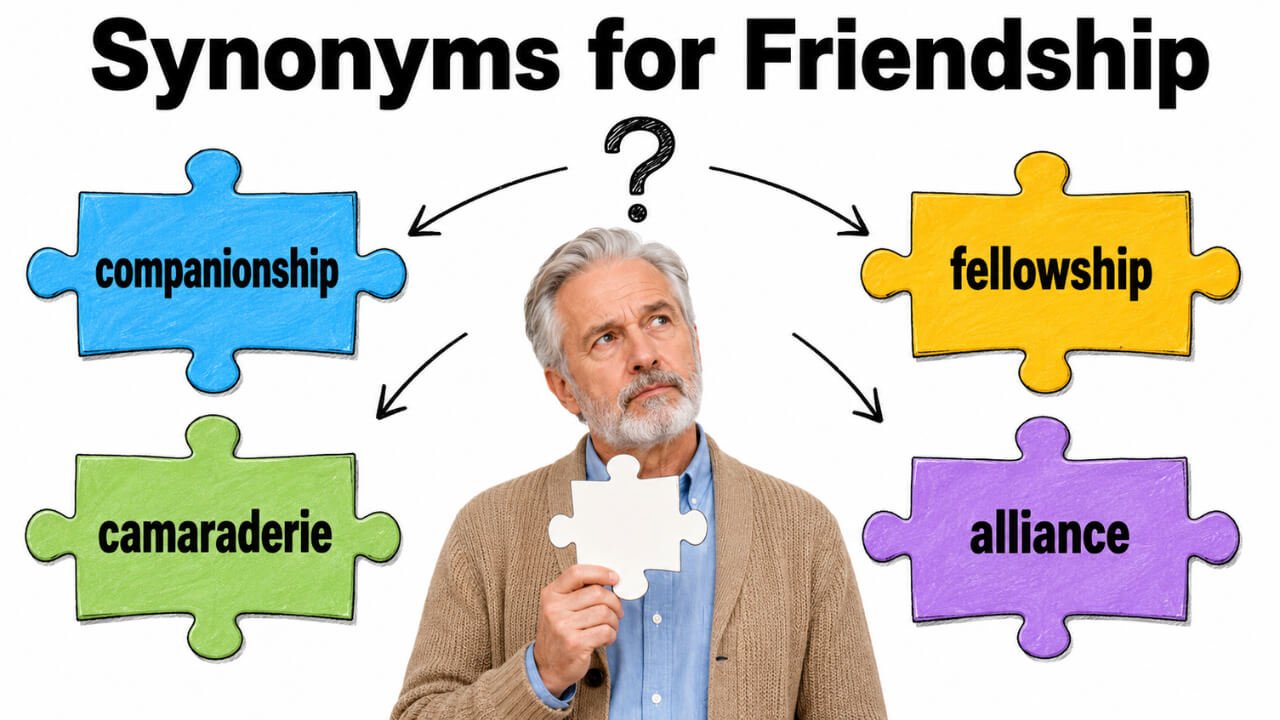
Quick Answer: Synonyms for friendship include companionship, fellowship, camaraderie, bond, closeness, rapport, affinity, kinship, amity, and connection. Use companionship for the comfort of spending time together, camaraderie for friendly trust within a group, and rapport for easy communication. Bond and closeness describe a strong personal relationship, while affinity suggests a natural connection based on shared interests. Amity is a more formal word for peaceful and friendly relations.
Pronunciation and Word Details
Word: Friendship
Pronunciation: /ˈfrendʃɪp/
Part of Speech: Noun
Meaning: A close and caring relationship between people based on trust, affection, support, and shared experiences.
US Pronunciation:
UK Pronunciation:
What Does “Friendship” Mean?
Friendship means a caring relationship between people who trust, respect, support, and enjoy spending time with one another.
Friendship is a noun. It may describe a close personal bond, a friendly relationship, or peaceful relations between individuals, groups, or countries.
In personal contexts, friendship often involves affection, honesty, loyalty, and emotional support. In professional or social settings, it may describe cooperation, goodwill, or a positive connection.
The word can refer to one particular relationship, as in “Their friendship began at school,” or to the general idea of friendly connection, as in “Friendship is built through trust.”
Meaning, Tone, and Context of “Friendship”
Friendship has a warm, positive, and emotionally meaningful tone. It is a neutral word that works naturally in casual conversation, formal writing, personal messages, essays, and discussions about relationships.
In everyday speech, friendship usually describes a personal bond between friends. In emotional writing, it can emphasize loyalty, affection, understanding, and support.
In formal or diplomatic contexts, friendship may describe peaceful and cooperative relations between communities or nations. Words such as amity, goodwill, and alliance may be more suitable in these situations.
In academic or psychological discussions, friendship may refer to social attachment, interpersonal connection, mutual trust, or companionship.
When and How to Use “Friendship”
For a Close Personal Bond: Use friendship when two people share trust, affection, and meaningful experiences.
Example: Their friendship grew stronger after years of supporting each other.
For Emotional Support: Use friendship when describing a relationship that provides comfort, encouragement, or understanding.
Example: Her friendship helped him through a difficult period.
For Shared Interests: Use friendship when people become close through similar hobbies, goals, or values.
Example: Their love of literature led to a lasting friendship.
For Friendly Cooperation: Use friendship to describe positive relations between groups, communities, or organizations.
Example: The event encouraged friendship between the two communities.
For Long Term Relationships: Use friendship when a bond continues through different stages of life.
Example: Their childhood friendship remained strong into adulthood.
For General Life Lessons: Use friendship when discussing the value of trust, kindness, loyalty, and human connection.
Example: True friendship requires patience and honesty.
Best Synonyms for Friendship
1. Companionship
Synonym: The comfort and enjoyment of spending time with another person.
Example: She valued his companionship during the long journey.
2. Fellowship
Synonym: A friendly relationship based on shared interests, beliefs, or experiences.
Example: The group developed a strong sense of fellowship.
3. Camaraderie
Synonym: Mutual trust and friendliness among people who spend time or work together.
Example: The team succeeded because of its strong camaraderie.
4. Bond
Synonym: A strong emotional connection between people.
Example: The sisters shared a close bond.
5. Closeness
Synonym: A feeling of emotional connection, familiarity, and trust.
Example: Their honesty created genuine closeness.
6. Rapport
Synonym: A comfortable relationship in which people communicate and understand each other easily.
Example: The teacher quickly built rapport with the students.
7. Affinity
Synonym: A natural connection based on shared interests, qualities, or feelings.
Example: They felt an immediate affinity because of their similar values.
8. Kinship
Synonym: A strong sense of connection based on shared experiences or characteristics.
Example: The artists felt a sense of kinship with one another.
9. Amity
Synonym: Peaceful and friendly relations between people, groups, or countries.
Example: The agreement promoted amity between the neighboring regions.
10. Connection
Synonym: A meaningful relationship or feeling of understanding between people.
Example: Their shared experiences created a lasting connection.
50 Synonyms for Friendship with Short Meanings
- Companionship: The comfort of spending time with someone.
- Fellowship: Friendship based on shared interests or beliefs.
- Camaraderie: Trust and friendliness within a group.
- Bond: A strong emotional relationship.
- Closeness: Emotional nearness and trust.
- Rapport: Easy communication and mutual understanding.
- Affinity: A natural liking or connection.
- Kinship: A feeling of shared identity or experience.
- Amity: Peaceful and friendly relations.
- Connection: A meaningful relationship between people.
- Companionship: Friendly company and emotional comfort.
- Comradeship: Friendship between people sharing experiences or goals.
- Association: A relationship formed through regular contact.
- Alliance: A cooperative relationship based on shared interests.
- Partnership: A relationship built on cooperation and shared responsibility.
- Attachment: A strong feeling of emotional connection.
- Affection: Warm feelings of care and fondness.
- Fondness: A gentle feeling of liking or affection.
- Intimacy: Deep emotional closeness and personal understanding.
- Trust: Confidence in another person’s honesty and reliability.
- Loyalty: Steady support and faithfulness.
- Devotion: Deep commitment and affection.
- Support: Help, encouragement, or emotional strength.
- Understanding: Mutual awareness of thoughts and feelings.
- Goodwill: Friendly and helpful feelings toward others.
- Harmony: Peaceful and pleasant relations.
- Unity: A state of being joined by shared purpose.
- Solidarity: Support and unity based on common interests.
- Togetherness: The feeling of being emotionally united.
- Mutuality: A relationship based on shared feelings and actions.
- Community: A sense of belonging and connection with others.
- Fraternity: Friendship and support among members of a group.
- Brotherhood: Strong loyalty and companionship between people.
- Sisterhood: Supportive friendship and unity among women.
- Neighborliness: Friendly and helpful behavior toward others nearby.
- Congeniality: A pleasant and friendly quality in a relationship.
- Cordiality: Warm and polite friendliness.
- Familiarity: Comfortable knowledge created through regular contact.
- Friendliness: Kind and welcoming behavior toward others.
- Sociability: A willingness to interact pleasantly with people.
- Cooperation: Working together in a helpful way.
- Accord: Agreement and harmonious relations.
- Sympathy: Understanding and concern for another person’s feelings.
- Empathy: The ability to understand another person’s emotions.
- Regard: Respect and warm consideration for someone.
- Acquaintanceship: A friendly relationship with someone known personally.
- Personal Connection: A meaningful relationship between individuals.
- Social Bond: A relationship formed through social interaction.
- Friendly Relations: Peaceful and positive connections between people.
- Close Relationship: A bond involving trust, care, and understanding.
Read Also:
Synonyms for Similarly

Synonyms for Friendship by Context
When Friendship Means a Close Personal Bond
Bond, closeness, intimacy, attachment, affection, and connection describe emotionally meaningful relationships.
Example: Their close bond remained strong despite living far apart.
Bond is a flexible choice for family members, friends, or partners. Closeness emphasizes emotional familiarity, while intimacy suggests private understanding and deep trust.
When Friendship Means Spending Time Together
Companionship, fellowship, association, and comradeship describe relationships formed through shared time or experiences.
Example: The travelers enjoyed each other’s companionship.
Companionship focuses on comfort and company. Fellowship often involves shared beliefs or interests. Comradeship is suitable for people who face challenges or complete tasks together.
When Friendship Means Group Loyalty
Camaraderie, solidarity, unity, fraternity, brotherhood, and sisterhood describe trust and support within a group.
Example: Years of working together created strong camaraderie among the staff.
Camaraderie is useful for teams and colleagues. Solidarity emphasizes mutual support, while unity focuses on being joined by a common goal.
When Friendship Means Natural Understanding
Rapport, affinity, kinship, empathy, and understanding describe easy communication or a natural emotional connection.
Example: The two writers developed an immediate rapport.
Rapport relates to comfortable communication. Affinity suggests shared interests or qualities. Kinship describes a deeper sense of similarity or shared experience.
When Friendship Means Peaceful Relations
Amity, goodwill, harmony, accord, alliance, and friendly relations work well in formal, political, or community contexts.
Example: The cultural program encouraged goodwill between the communities.
Amity is formal and emphasizes peace. Goodwill expresses positive intentions, while accord suggests agreement and harmony.
When Friendship Means Support and Loyalty
Trust, loyalty, devotion, support, sympathy, and regard describe qualities that strengthen a friendship.
Example: Their friendship was based on trust and loyalty.
Trust focuses on reliability. Loyalty emphasizes lasting support. Devotion suggests deep commitment and care.
Another Word for Friendship
The best single replacement for friendship is companionship when the sentence focuses on enjoying another person’s company. Bond is better when the relationship is emotionally strong, while camaraderie suits group relationships. The best alternative always depends on the intended meaning.
Original: Their friendship made the trip more enjoyable.
Better Option: Their companionship made the trip more enjoyable.
Original: Years of shared experiences strengthened their friendship.
Better Option: Years of shared experiences strengthened their bond.
Original: Friendship among the team members improved cooperation.
Better Option: Camaraderie among the team members improved cooperation.
Original: Their friendship developed through shared interests.
Better Option: Their affinity developed through shared interests.
When Not to Use “Friendship”
Avoid using friendship when a more precise word can explain the type of relationship. Friendship may sound too general when the sentence focuses specifically on teamwork, emotional closeness, peaceful relations, or professional cooperation.
Weak: The friendship among the emergency workers helped them remain calm.
Better: The camaraderie among the emergency workers helped them remain calm.
Do not use friendship for a relationship based only on business cooperation unless the people also share personal affection and trust.
Weak: The companies formed a friendship to develop a new service.
Better: The companies formed a partnership to develop a new service.
Avoid repeating friendship several times in a short paragraph. Use suitable alternatives to improve flow and clarity.
Weak: Their friendship began at school, and their friendship became stronger through years of friendship.
Better: Their friendship began at school, and their bond became stronger through years of companionship.
Do not use intimate or deeply emotional synonyms for casual relationships.
Weak: She developed deep intimacy with a new classmate after one conversation.
Better: She developed a friendly connection with a new classmate after one conversation.
Words Commonly Confused With Friendship
Friendship vs Companionship: Friendship is a complete personal relationship involving trust and affection. Companionship focuses more on the comfort of spending time together.
Friendship vs Acquaintanceship: Friendship usually involves emotional closeness. Acquaintanceship describes a more limited relationship with someone you know but may not know deeply.
Friendship vs Camaraderie: Friendship can exist between individuals in any situation. Camaraderie usually develops within a team or group through shared work or experiences.
Friendship vs Fellowship: Friendship is a general personal bond. Fellowship often develops through shared beliefs, interests, activities, or membership in a group.
Friendship vs Rapport: Friendship is a continuing relationship. Rapport is the ability to communicate comfortably and understand one another, even without a close friendship.
Friendship vs Affinity: Friendship is an established relationship. Affinity is a natural attraction or sense of similarity that may lead to friendship.
Friendship vs Alliance: Friendship is usually personal and emotional. An alliance is often practical and formed to achieve a common goal.
Friendship vs Intimacy: Friendship may involve different levels of closeness. Intimacy suggests a deep and private emotional connection.
Which Synonym Should You Choose?
Choose companionship when discussing the comfort and pleasure of spending time with someone.
Choose bond when describing a strong emotional connection that develops over time.
Choose camaraderie when writing about friendship among teammates, coworkers, classmates, or members of a group.
Choose rapport when people communicate comfortably and understand each other easily.
Choose affinity when people connect naturally because of shared interests, personalities, or values.
Choose fellowship when a relationship is based on common beliefs, activities, or experiences.
Choose amity for formal writing about peaceful relations between groups, communities, or countries.
Choose kinship when people feel connected because of similar backgrounds, experiences, or beliefs.
Choose closeness when emphasizing emotional trust and familiarity.
Choose partnership in reports, emails, or business writing when the relationship is based on cooperation rather than personal affection.
Choose goodwill when describing positive intentions, kindness, and respectful relations.
Choose friendship in general writing when the relationship includes affection, trust, loyalty, and mutual support.
Real Life Examples of “Friendship” in Sentences
Original: Their friendship began during their first year at college.
Better Option: Their companionship began during their first year at college.
Original: The difficult project strengthened the friendship among the team members.
Better Option: The difficult project strengthened the camaraderie among the team members.
Original: Their friendship was based on shared values.
Better Option: Their affinity was based on shared values.
Original: She formed a friendship with her new neighbor.
Better Option: She formed a warm connection with her new neighbor.
Original: Their friendship helped them understand each other without lengthy explanations.
Better Option: Their rapport helped them understand each other without lengthy explanations.
Original: The friendship between the two communities improved after the event.
Better Option: The goodwill between the two communities improved after the event.
Original: Years of friendship created deep trust between them.
Better Option: Years of companionship created deep trust between them.
Original: Their friendship remained strong during difficult times.
Better Option: Their bond remained strong during difficult times.
Original: The club encouraged friendship among people with similar interests.
Better Option: The club encouraged fellowship among people with similar interests.
Original: She felt an immediate friendship with the other volunteers.
Better Option: She felt an immediate sense of kinship with the other volunteers.
Synonym Groups and Usage Differences
Emotional Connection Group
Bond, closeness, attachment, intimacy, affection, and devotion describe the emotional side of friendship.
Use these words when emphasizing care, trust, familiarity, or personal commitment.
Example: Their emotional bond became stronger after years of shared experiences.
Shared Experience Group
Companionship, comradeship, fellowship, association, and camaraderie describe relationships formed through time spent together.
These words work well for classmates, travelers, coworkers, teammates, and group members.
Example: The long journey created lasting companionship among the travelers.
Understanding Group
Rapport, affinity, kinship, empathy, and mutual understanding describe relationships based on easy communication or shared feelings.
Use rapport for communication, affinity for natural similarity, and kinship for a deeper sense of shared identity.
Example: The two musicians felt an immediate affinity.
Loyalty and Support Group
Trust, loyalty, solidarity, support, and devotion describe dependable relationships.
These words emphasize standing by someone, offering help, and remaining committed during difficult situations.
Example: Their loyalty remained firm during the disagreement.
Peaceful Relations Group
Amity, accord, harmony, goodwill, alliance, and cordiality describe positive relations in formal or public settings.
These alternatives are useful for communities, organizations, and nations.
Example: The agreement created greater harmony between the two groups.
Social Connection Group
Friendliness, sociability, neighborliness, community, familiarity, and association describe general positive interaction.
These words may describe relationships that are friendly without being deeply personal.
Example: Her neighborliness made new residents feel welcome.
Antonyms of Friendship
The opposite of friendship depends on whether the word refers to affection, trust, cooperation, or peaceful relations.
Enmity: Deep and lasting hostility.
Hostility: Unfriendly or aggressive behavior.
Hatred: A powerful feeling of dislike.
Rivalry: Competition that may create tension or conflict.
Conflict: Serious disagreement or opposition.
Distrust: Lack of confidence in another person’s honesty.
Alienation: Emotional or social separation from others.
Isolation: A state of being separated from companionship.
Disunity: Lack of agreement or togetherness.
Antagonism: Active opposition or dislike.
Estrangement: The loss of a previously close relationship.
Unfriendliness: Cold or unwelcoming behavior.
Betrayal: The breaking of trust or loyalty.
Division: Separation caused by disagreement.
Opposition: Resistance toward another person or group.
Comparison: Friendship vs Related Words
Friendship vs Companionship
Friendship includes trust, affection, loyalty, and mutual understanding. Companionship focuses on the comfort and pleasure of being with another person.
Example With Friendship: Their friendship survived many years of change.
Example With Companionship: He appreciated her companionship during the journey.
Friendship vs Camaraderie
Friendship may develop in any personal setting. Camaraderie usually forms among people who work, train, travel, or face challenges together.
Example With Friendship: Their friendship began when they were children.
Example With Camaraderie: The players celebrated their strong camaraderie.
Friendship vs Rapport
Friendship is a continuing personal relationship. Rapport is a feeling of comfortable communication that can develop quickly.
Example With Friendship: Their friendship became stronger over time.
Example With Rapport: The interviewer established rapport with the guest immediately.
Friendship vs Affinity
Friendship is an established bond between people. Affinity is a natural connection caused by shared interests, values, or qualities.
Example With Friendship: Their friendship lasted for decades.
Example With Affinity: They discovered a shared affinity for classical music.
Friendship vs Fellowship
Friendship is usually a personal relationship between individuals. Fellowship often describes friendly unity within a group.
Example With Friendship: Their friendship was built on honesty.
Example With Fellowship: The workshop created fellowship among the participants.
Friendship vs Amity
Friendship is common in personal contexts. Amity is a formal word for peaceful and friendly relations.
Example With Friendship: Their friendship brought joy to both families.
Example With Amity: The leaders worked to restore amity between the regions.
Friendship vs Alliance
Friendship is based mainly on affection and trust. An alliance is formed for cooperation, protection, or a shared objective.
Example With Friendship: Their friendship grew through personal conversations.
Example With Alliance: The two groups formed an alliance to protect the local environment.
Common Phrases and Expressions With “Friendship”
True Friendship: A sincere relationship based on trust and loyalty.
Close Friendship: A relationship involving strong emotional connection.
Lasting Friendship: A relationship that continues for a long time.
Childhood Friendship: A friendship that began during childhood.
Lifelong Friendship: A close relationship that continues throughout life.
Strong Friendship: A dependable relationship that can survive difficulties.
Deep Friendship: A relationship involving meaningful emotional understanding.
Beautiful Friendship: A caring and positive relationship that brings happiness.
New Friendship: A friendly relationship that has recently begun.
Meaningful Friendship: A relationship that provides emotional value and support.
Friendship Circle: A group of people connected through friendship.
Friendship Bond: The emotional connection shared by friends.
Friendship and Trust: A relationship strengthened by honesty and reliability.
Friendship and Loyalty: A bond supported by faithfulness and commitment.
Hand of Friendship: A friendly offer of support, peace, or cooperation.
Common Mistakes to Avoid
One common mistake is treating every synonym for friendship as interchangeable. Each alternative highlights a different part of the relationship.
Use companionship when the focus is shared company. Use camaraderie for group trust, rapport for easy communication, and amity for formal peaceful relations.
Avoid using alliance for a warm personal relationship unless the sentence focuses on cooperation or a shared goal. An alliance may be practical without involving affection.
Do not use acquaintanceship when describing a deeply trusted friend. An acquaintance is someone known personally, but the relationship may not include emotional closeness.
Avoid overusing friendship in the same paragraph. Replace repeated uses with bond, connection, companionship, or relationship when those words fit the meaning.
Be careful with intimacy because it suggests a deep and private level of closeness. It may sound too strong for ordinary or new friendships.
Do not confuse friendliness with friendship. Friendliness is welcoming behavior, while friendship is an established relationship.
Choose synonyms according to the sentence rather than selecting the most unusual word. A clear and familiar alternative is usually better than a formal word that changes the meaning.
Conclusion
Synonyms for friendship allow you to describe different kinds of human connection more precisely. Companionship is best for shared company, while bond and closeness express emotional connection. Camaraderie suits teams and groups, rapport describes easy communication, and affinity shows a natural similarity. Fellowship works for shared interests, while amity is useful in formal discussions of peaceful relations. Choosing the right alternative helps your writing communicate trust, loyalty, cooperation, affection, and support without unnecessary repetition.
FAQs About Synonyms for Friendship
What Is the Best Synonym for Friendship?
Companionship is one of the best general synonyms. Bond, connection, and fellowship are also useful depending on the context.
What Is a Formal Word for Friendship?
Amity is a formal word for friendship or peaceful relations. Fellowship and goodwill can also suit formal writing.
What Word Describes a Strong Friendship?
Bond, closeness, intimacy, and devotion can describe a strong friendship. Bond is the most flexible choice.
What Is Another Word for Friendship in a Team?
Camaraderie is the best word for trust and friendship among teammates or coworkers. Solidarity and unity may also fit.
What Is the Difference Between Friendship and Companionship?
Friendship is a complete relationship based on trust and affection. Companionship mainly emphasizes enjoying someone’s company.
Can Rapport Be a Synonym for Friendship?
Rapport can be a related alternative when the sentence focuses on easy communication and mutual understanding. It does not always mean a close friendship.
What Are Emotional Synonyms for Friendship?
Closeness, bond, affection, attachment, intimacy, devotion, and kinship are emotional synonyms or close alternatives for friendship.
