
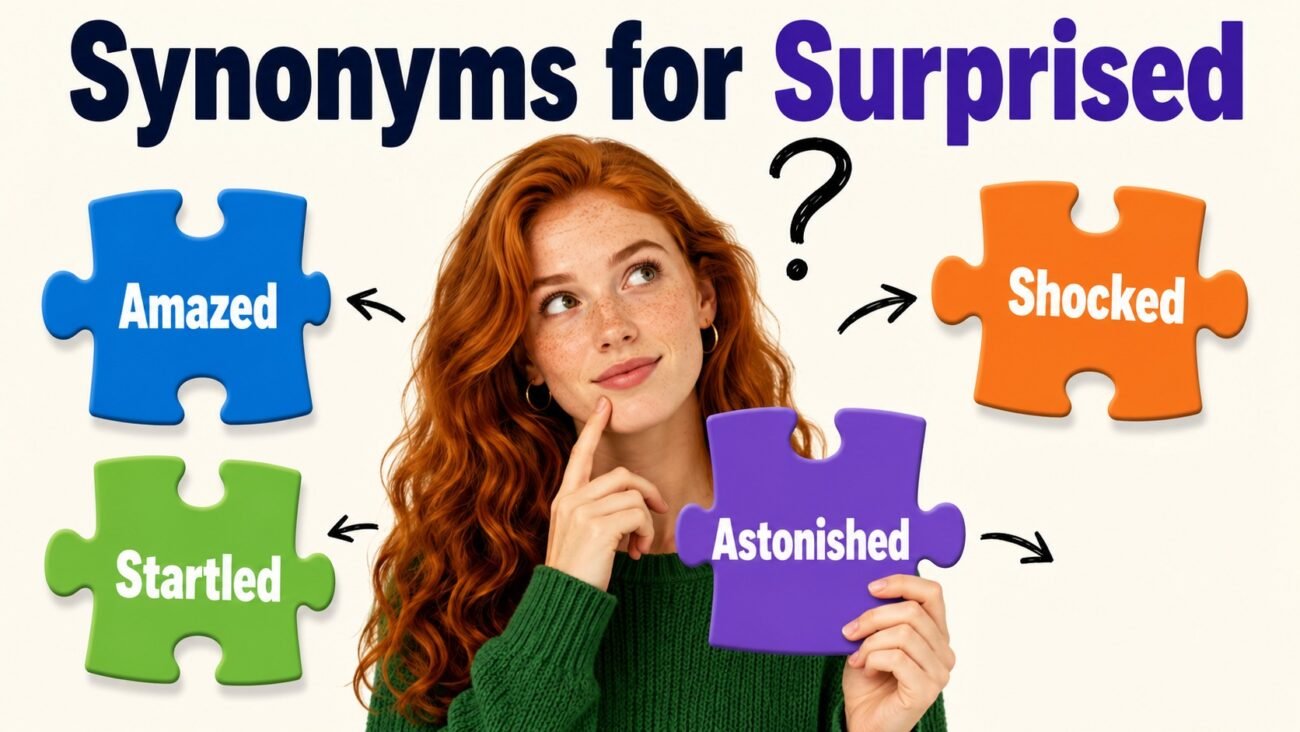
Quick Answer: Synonyms for surprised include amazed, astonished, shocked, startled, stunned, astounded, taken aback, flabbergasted, dumbfounded, and speechless. Use amazed for positive surprise, shocked for strong negative surprise, startled for a sudden reaction, stunned for speechless surprise, astonished for formal or expressive writing, and taken aback when someone is unexpectedly affected by news, behavior, or a situation.
Pronunciation and Word Details
Word: Surprised
Pronunciation: /sərˈpraɪzd/
Part of Speech: Adjective
Meaning: Surprised means feeling or showing an unexpected reaction because something unusual, sudden, or not expected has happened.
US Pronunciation:
UK Pronunciation:
What Does “Surprised” Mean?
Surprised means feeling an unexpected reaction when something happens that you did not predict. It is usually used as an adjective, as in “She was surprised by the news.” It can describe a mild reaction, a strong emotional response, a sudden shock, or a pleasant feeling.
The word surprised can be positive, negative, or neutral. You can be surprised by a gift, surprised by bad news, surprised by a loud sound, or surprised by someone’s behavior. Its meaning depends on the situation and tone.
Meaning, Tone, and Context of “Surprised”
Surprised is a common, neutral, and conversational word. It is easy to understand and works in everyday speech, school writing, stories, messages, essays, and general communication. The tone can change depending on the cause of the surprise.
In positive contexts, surprised can mean pleased, amazed, or impressed. In negative contexts, it can mean shocked, alarmed, or disturbed. In sudden situations, it can mean startled or jolted. In formal writing, stronger or more exact words like astonished, stunned, taken aback, or astounded may sound more precise.
When and How to Use “Surprised”
For Unexpected News: Use surprised when someone hears news they did not expect.
Example: I was surprised by the final result.
For Positive Reactions: Use surprised when something unexpectedly good happens.
Example: She was surprised by the thoughtful gift.
For Sudden Reactions: Use surprised when someone reacts quickly to a sudden sound, action, or event.
Example: He looked surprised when the door opened.
For Strong Emotion: Use surprised when someone feels deeply affected by an unexpected situation.
Example: They were surprised by how quickly everything changed.
Best Synonyms for Surprised
Amazed: Very surprised in a positive or impressive way.
Example: She was amazed by the beautiful view.
Astonished: Extremely surprised, often in a formal or expressive way.
Example: He was astonished by the unexpected decision.
Shocked: Strongly surprised, often because something is bad, serious, or upsetting.
Example: We were shocked by the sudden announcement.
Startled: Suddenly surprised by something quick or unexpected.
Example: The loud noise startled the baby.
Stunned: So surprised that you cannot react normally.
Example: She was stunned by the news.
Astounded: Deeply surprised by something impressive or difficult to believe.
Example: The audience was astounded by his performance.
Taken Aback: Surprised and slightly upset or confused by something unexpected.
Example: He was taken aback by her honest reply.
Flabbergasted: Extremely surprised in an informal and expressive way.
Example: I was flabbergasted by the final score.
Dumbfounded: So surprised that you cannot speak or respond.
Example: They were dumbfounded by the strange answer.
Speechless: Unable to speak because of surprise or emotion.
Example: She was speechless when she saw the award.
50 Synonyms for Surprised with Short Meanings
- Amazed: Very surprised in a positive way.
- Astonished: Extremely surprised.
- Astounded: Deeply surprised or amazed.
- Stunned: Too surprised to react quickly.
- Shocked: Strongly surprised, often negatively.
- Startled: Suddenly surprised by something unexpected.
- Taken Aback: Surprised by something unexpected or direct.
- Flabbergasted: Extremely surprised in an informal way.
- Dumbfounded: Too surprised to speak.
- Speechless: Unable to speak because of surprise.
- Thunderstruck: Completely surprised or shocked.
- Staggered: Strongly affected by surprise.
- Awestruck: Filled with wonder and surprise.
- Wonderstruck: Amazed by something impressive.
- Impressed: Positively surprised by quality or skill.
- Blown Away: Very impressed or amazed.
- Dazed: Confused after surprise or shock.
- Bewildered: Surprised and confused.
- Puzzled: Unsure because something is surprising.
- Perplexed: Confused by something unexpected.
- Confused: Unable to understand a surprising situation.
- Nonplussed: Unsure how to react.
- Disoriented: Confused after a sudden surprise.
- Unprepared: Not ready for what happened.
- Caught Off Guard: Surprised because something was not expected.
- Caught Unawares: Surprised without warning.
- Jolted: Suddenly shocked or surprised.
- Jarred: Shocked by something sudden or unpleasant.
- Rattled: Nervous or disturbed after a surprise.
- Shaken: Emotionally affected by surprise or shock.
- Alarmed: Worried and surprised.
- Frightened: Surprised in a fearful way.
- Scared: Afraid because of something unexpected.
- Aghast: Shocked and upset.
- Appalled: Shocked by something wrong or unpleasant.
- Horrified: Extremely shocked and frightened.
- Disturbed: Upset by something surprising.
- Unsettled: Made uneasy by surprise.
- Disconcerted: Made uncomfortable by an unexpected event.
- Discomposed: Disturbed or thrown off balance.
- Confounded: Surprised and confused.
- Floored: Strongly surprised or shocked.
- Overwhelmed: Deeply affected by surprise or emotion.
- Delighted: Happily surprised.
- Thrilled: Excited and pleasantly surprised.
- Excited: Happily affected by unexpected news.
- Intrigued: Surprised and interested.
- Open Mouthed: Showing visible surprise.
- Wide Eyed: Showing wonder or surprise.
- Lost for Words: Unable to speak because of surprise.
Read Also:
Synonyms for Alone

Synonyms for Surprised by Context
When Surprised Means Amazed
Use these synonyms when the surprise is positive, impressive, or full of wonder.
Useful Synonyms: Amazed, astonished, astounded, awestruck, wonderstruck, impressed.
Example: She was surprised by the beautiful performance.
Better Option: She was amazed by the beautiful performance.
When Surprised Means Shocked
Use these synonyms when the surprise is strong, serious, unpleasant, or difficult to accept.
Useful Synonyms: Shocked, stunned, aghast, appalled, horrified, shaken.
Example: They were surprised by the bad news.
Better Option: They were shocked by the bad news.
When Surprised Means Startled
Use these synonyms when the surprise happens suddenly because of sound, movement, or action.
Useful Synonyms: Startled, jolted, jarred, alarmed, frightened, caught off guard.
Example: He was surprised by the loud knock.
Better Option: He was startled by the loud knock.
When Surprised Means Confused
Use these synonyms when the surprise makes someone unsure, puzzled, or unable to understand.
Useful Synonyms: Bewildered, puzzled, perplexed, confused, nonplussed, confounded.
Example: I was surprised by his strange answer.
Better Option: I was puzzled by his strange answer.
When Surprised Means Pleasantly Surprised
Use these synonyms when the reaction is happy, excited, or positive.
Useful Synonyms: Delighted, thrilled, impressed, amazed, excited, blown away.
Example: She was surprised by the kind message.
Better Option: She was delighted by the kind message.
Another Word for Surprised
Another word for surprised is astonished. It is a strong and useful replacement when you want to show a deeper reaction than simple surprise. However, the best alternative depends on the context. Use amazed for positive surprise, shocked for negative surprise, startled for sudden surprise, and stunned when someone cannot react normally.
Original: She was surprised by the news.
Better Option: She was astonished by the news.
Original: I was surprised by his kindness.
Better Option: I was amazed by his kindness.
Original: He was surprised by the loud sound.
Better Option: He was startled by the loud sound.
Original: They were surprised by the sudden change.
Better Option: They were stunned by the sudden change.
When Not to Use “Surprised”
Do not use surprised when a more exact word gives the reader a clearer feeling. If the situation is happy, use amazed, delighted, or thrilled. If it is serious or upsetting, use shocked, stunned, or appalled. If the reaction is caused by a sudden sound or movement, use startled.
Weak: She was surprised by the beautiful painting.
Better: She was amazed by the beautiful painting.
Weak: We were surprised by the terrible accident.
Better: We were shocked by the terrible accident.
Weak: He was surprised when the alarm rang.
Better: He was startled when the alarm rang.
Weak: I was very surprised and could not speak.
Better: I was speechless.
Words Commonly Confused With Surprised
Surprised vs Shocked: Surprised can be mild, positive, negative, or neutral. Shocked is stronger and often means the event is serious, upsetting, or hard to believe.
Surprised vs Amazed: Surprised means something was unexpected. Amazed means the surprise is usually positive, impressive, or wonderful.
Surprised vs Startled: Surprised is general. Startled means a sudden surprise caused by sound, movement, or a quick event.
Surprised vs Astonished: Surprised is common and simple. Astonished is stronger and more expressive.
Surprised vs Stunned: Surprised means unexpected reaction. Stunned means the person is so surprised that they may pause, freeze, or struggle to respond.
Surprised vs Confused: Surprised is about an unexpected reaction. Confused is about not understanding something clearly.
Which Synonym Should You Choose?
Choose amazed when the surprise is positive, beautiful, impressive, or exciting.
Choose shocked when the surprise is serious, negative, upsetting, or hard to accept.
Choose startled when the surprise happens suddenly because of a sound, movement, or action.
Choose astonished when you need a stronger and more formal word than surprised.
Choose stunned when someone is so surprised that they cannot react quickly.
Choose taken aback when someone is surprised by a direct comment, strange behavior, or unexpected situation.
Choose flabbergasted when you want an informal and expressive word for extreme surprise.
Choose puzzled or perplexed when the surprise also includes confusion.
Real Life Examples of “Surprised” in Sentences
Original: I was surprised by her answer.
Better Option: I was taken aback by her answer.
Original: She was surprised by the final result.
Better Option: She was astonished by the final result.
Original: He was surprised when the dog barked.
Better Option: He was startled when the dog barked.
Original: We were surprised by the bad news.
Better Option: We were shocked by the bad news.
Original: They were surprised by the singer’s voice.
Better Option: They were amazed by the singer’s voice.
Original: I was surprised and did not know what to say.
Better Option: I was speechless.
Original: The teacher was surprised by his improvement.
Better Option: The teacher was impressed by his improvement.
Original: She looked surprised after reading the message.
Better Option: She looked stunned after reading the message.
Original: He was surprised by the confusing instructions.
Better Option: He was puzzled by the confusing instructions.
Original: The crowd was surprised by the sudden ending.
Better Option: The crowd was dumbfounded by the sudden ending.
Synonym Groups and Usage Differences
Positive Surprise Group
This group describes happy, impressive, or pleasant surprise. Words like amazed, delighted, thrilled, impressed, and awestruck work well when the feeling is good.
Example: She was delighted by the thoughtful gift.
Strong Shock Group
This group describes serious or intense surprise. Words like shocked, stunned, aghast, appalled, and horrified are useful when the situation is negative or emotional.
Example: They were stunned by the sudden announcement.
Sudden Reaction Group
This group describes quick surprise caused by something unexpected. Words like startled, jolted, jarred, and caught off guard fit sudden sounds, actions, or changes.
Example: He was jolted by the loud crash.
Confusion Group
This group describes surprise mixed with uncertainty. Words like puzzled, perplexed, bewildered, nonplussed, and confused work when someone does not understand what happened.
Example: I was perplexed by her unusual response.
Speechless Reaction Group
This group describes surprise so strong that a person cannot respond. Words like speechless, dumbfounded, flabbergasted, floored, and lost for words show strong emotional impact.
Example: He was dumbfounded by the unexpected offer.
Antonyms of Surprised
The antonyms of surprised depend on the situation. If surprised means not expecting something, the opposite is expecting or prepared. If it means emotionally affected, the opposite can be calm, composed, or unaffected.
Unsurprised: Not surprised by what happened.
Expecting: Thinking something will happen.
Prepared: Ready for a possible situation.
Aware: Knowing about something already.
Ready: Mentally or physically prepared.
Calm: Not emotionally disturbed.
Composed: In control of emotions.
Unaffected: Not changed or moved emotionally.
Unimpressed: Not amazed or interested.
Indifferent: Not caring strongly either way.
Comparison: Surprised vs Related Words
Surprised vs Amazed
Surprised means something was unexpected. Amazed means the unexpected thing was impressive, wonderful, or hard to believe in a positive way.
Example With Surprised: I was surprised by the news.
Example With Amazed: I was amazed by her talent.
Surprised vs Shocked
Surprised can be mild or strong. Shocked is stronger and often connected with bad, serious, or upsetting news.
Example With Surprised: She was surprised by the change.
Example With Shocked: She was shocked by the accident.
Surprised vs Startled
Surprised is a general reaction to the unexpected. Startled means a sudden physical or emotional reaction, often caused by sound or movement.
Example With Surprised: He was surprised by the visit.
Example With Startled: He was startled by the loud knock.
Surprised vs Stunned
Surprised means something unexpected happened. Stunned means the surprise is so strong that someone may pause or fail to respond.
Example With Surprised: They were surprised by the result.
Example With Stunned: They were stunned by the result.
Surprised vs Astonished
Surprised is common and simple. Astonished is stronger, more expressive, and often better for formal or descriptive writing.
Example With Surprised: I was surprised by his answer.
Example With Astonished: I was astonished by his answer.
Common Phrases and Expressions With Surprised
Pleasantly Surprised: Happily surprised by something good.
Genuinely Surprised: Truly surprised, not pretending.
Visibly Surprised: Showing surprise through face or body language.
Not Surprised: Already expecting the result.
Surprised Look: A facial expression showing surprise.
Surprised Reaction: A response caused by something unexpected.
Surprised by the News: Affected by unexpected information.
Surprised to Learn: Finding out something unexpected.
Surprised at First: Shocked or amazed in the beginning.
Surprised Beyond Words: So surprised that speaking is difficult.
Common Mistakes to Avoid
A common mistake is using surprised for every unexpected reaction. Surprised is useful, but it can sound weak if the feeling is stronger. Use shocked for serious news, amazed for positive wonder, and startled for sudden sounds or actions.
Another mistake is confusing surprised with confused. A person can be surprised without being confused. Use confused only when the person does not understand the situation.
Avoid repeating very surprised many times. Stronger options like astonished, stunned, dumbfounded, or flabbergasted are more vivid.
Also avoid using shocked for positive situations unless the sentence clearly shows excitement or disbelief. For example, “I was shocked by the beautiful flowers” may sound too strong or negative. “I was amazed by the beautiful flowers” is clearer.
Conclusion
Synonyms for surprised help you describe unexpected reactions with better accuracy and emotion. Use amazed for positive surprise, shocked for serious or negative surprise, startled for sudden reactions, stunned for speechless surprise, and astonished for a stronger formal tone. Words like taken aback, puzzled, and flabbergasted add more detail when the situation is personal, confusing, or extreme. Choosing the right synonym makes your writing clearer, more expressive, and more natural.
FAQs About Synonyms for Surprised
What is the best synonym for surprised?
The best synonym for surprised is astonished when you want a stronger word. Use amazed for positive surprise and shocked for negative surprise.
What is another word for very surprised?
Another word for very surprised is stunned. You can also use astounded, flabbergasted, dumbfounded, or speechless.
Is shocked the same as surprised?
No. Shocked is stronger than surprised and often describes a serious, upsetting, or difficult to believe situation.
What is a positive synonym for surprised?
A positive synonym for surprised is amazed. Other positive choices include delighted, thrilled, impressed, and awestruck.
What is a formal synonym for surprised?
A formal synonym for surprised is astonished. You can also use astounded, stunned, or taken aback in formal writing.
What is a casual synonym for surprised?
A casual synonym for surprised is blown away. Another casual option is caught off guard.
What is the opposite of surprised?
The opposite of surprised can be unsurprised, expecting, prepared, aware, calm, or unaffected, depending on the sentence.
