
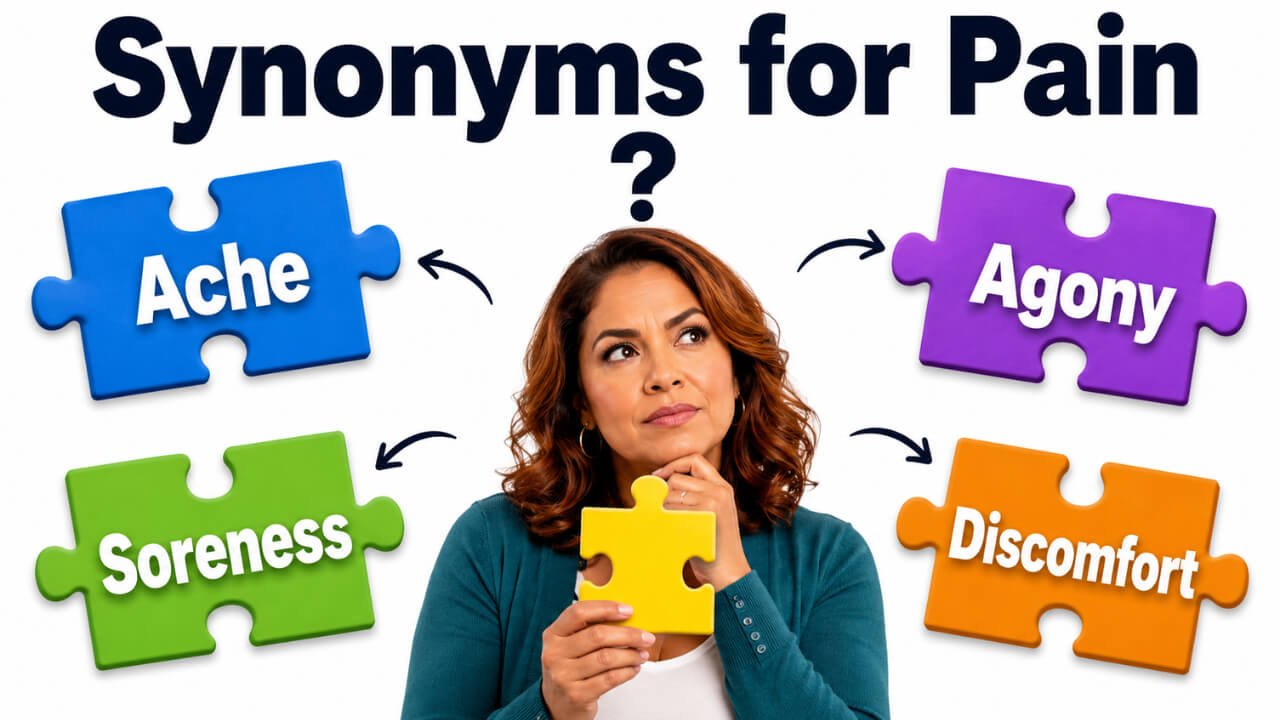
Quick Answer: Synonyms for pain include ache, hurt, soreness, discomfort, distress, suffering, agony, anguish, torment, and misery. The best synonym depends on the context. Use ache for a dull physical feeling, soreness for tender muscles or body parts, discomfort for mild pain, agony for extreme pain, anguish for deep emotional pain, and distress for mental or emotional trouble.
Pronunciation and Word Details
Word: Pain
Pronunciation: /peɪn/
Part of Speech: Noun and verb
Meaning: Pain means physical suffering, emotional suffering, or a feeling of hurt.
US Pronunciation:
UK Pronunciation:
What Does “Pain” Mean?
Pain means an unpleasant feeling in the body or mind. As a noun, it can describe physical discomfort, emotional suffering, sadness, or distress. As a verb, pain means to cause hurt, sadness, or trouble to someone.
In everyday use, pain can describe many levels of suffering. A small injury may cause mild pain, while a serious wound may cause severe pain. The word also works in emotional contexts, such as the pain of loss, rejection, regret, or disappointment. Because pain is broad, choosing a more exact synonym often makes writing clearer and stronger.
Meaning, Tone, and Context of “Pain”
Pain is a neutral and common word. It is used in casual speech, medical writing, emotional writing, reports, stories, and everyday conversation. It can describe both physical and emotional experiences.
The tone of pain depends on context. In a medical sentence, it sounds clear and factual. In emotional writing, it can sound personal and serious. In casual conversation, it is simple and direct. Stronger synonyms like agony, torment, and anguish make the feeling more intense. Softer words like discomfort, ache, and soreness make the meaning milder and more specific.
When and How to Use “Pain”
For Physical Suffering: Use pain when talking about an unpleasant feeling in the body.
Example: She felt pain in her shoulder after lifting the heavy box.
For Emotional Suffering: Use pain when describing sadness, grief, regret, or emotional hurt.
Example: His words caused more pain than he realized.
For Medical Contexts: Use pain when describing symptoms clearly and directly.
Example: The patient reported chest pain during the night.
For General Discomfort: Use pain when the exact type of hurt is not yet known.
Example: I have pain in my lower back.
For Strong Feelings: Use pain when the feeling is serious but you do not want to overstate it.
Example: Losing the old home brought her a deep sense of pain.
Best Synonyms for Pain
Ache: A dull or lasting physical pain.
Example: I had an ache in my legs after the long walk.
Hurt: A simple word for physical or emotional pain.
Example: His careless comment really hurt her.
Soreness: Tender or aching pain, often after exercise or pressure.
Example: The soreness in my arms lasted for two days.
Discomfort: Mild or moderate pain that feels unpleasant but not severe.
Example: He felt discomfort after sitting too long.
Distress: Emotional or mental suffering.
Example: The news caused great distress among the family.
Suffering: A broad word for physical or emotional pain over time.
Example: Her suffering became easier after treatment and support.
Agony: Extreme physical or emotional pain.
Example: He was in agony after the accident.
Anguish: Deep emotional pain, sadness, or worry.
Example: She felt anguish after hearing the heartbreaking news.
Torment: Severe pain, worry, or emotional suffering that feels hard to escape.
Example: The memory became a source of torment.
Misery: Great unhappiness or suffering.
Example: The illness left him in misery for weeks.
50 Synonyms for Pain with Short Meanings
- Ache: A dull and steady physical pain.
- Hurt: Physical or emotional pain.
- Soreness: Tender pain in muscles or body parts.
- Discomfort: Mild or unpleasant physical feeling.
- Distress: Mental or emotional suffering.
- Suffering: Ongoing physical or emotional pain.
- Agony: Very severe pain.
- Anguish: Deep emotional suffering.
- Torment: Intense pain or mental suffering.
- Misery: Great sadness or suffering.
- Grief: Emotional pain after loss.
- Heartache: Deep sadness or emotional hurt.
- Woe: Serious sadness or trouble.
- Affliction: A condition that causes suffering.
- Hardship: Difficulty that causes suffering.
- Trouble: A problem that causes pain or worry.
- Disturbance: An uncomfortable physical or mental upset.
- Unease: A mild feeling of discomfort or worry.
- Twinge: A sudden small pain.
- Pang: A sharp brief pain or emotional feeling.
- Throb: A pulsing pain.
- Sting: A sharp burning pain.
- Smart: A sharp stinging pain.
- Burning: A hot painful feeling.
- Cramp: A tight painful muscle feeling.
- Tenderness: Pain when touched or pressed.
- Irritation: Mild pain or discomfort.
- Inflammation: Pain and swelling in body tissue.
- Sensitivity: Pain or discomfort from touch or pressure.
- Rawness: A sore exposed feeling.
- Strain: Pain from overuse or pressure.
- Injury: Physical harm that causes pain.
- Wound: A damaged area that causes pain.
- Bruise: Pain from an injured area under the skin.
- Ailment: A sickness or condition causing discomfort.
- Complaint: A physical problem or symptom.
- Malady: An illness or painful condition.
- Illness: A sickness that may cause pain.
- Sickness: Poor health with discomfort.
- Trauma: Physical or emotional injury.
- Shock: Sudden emotional or physical distress.
- Regret: Emotional pain about a past action.
- Remorse: Deep guilt and emotional pain.
- Sorrow: Deep sadness.
- Sadness: Emotional pain or unhappiness.
- Despair: Loss of hope with deep suffering.
- Lament: Expression of grief or sorrow.
- Burden: A heavy emotional or physical difficulty.
- Trial: A painful or difficult experience.
- Ordeal: A severe and difficult experience.
Read Also:
Synonyms for Increase

Synonyms for Pain by Context
When Pain Means Physical Hurt
Use these synonyms when pain refers to the body, injury, illness, or physical discomfort.
Ache: I have an ache in my neck.
Soreness: The soreness appeared after exercise.
Twinge: She felt a twinge in her knee.
Sting: The cut caused a sharp sting.
Cramp: He had a cramp in his leg.
When Pain Means Mild Discomfort
Use these words when the feeling is unpleasant but not extreme.
Discomfort: The chair caused some discomfort.
Unease: She felt unease in her stomach.
Irritation: The lotion caused skin irritation.
Sensitivity: Tooth sensitivity made cold drinks painful.
When Pain Means Severe Suffering
Use these synonyms when the pain is intense, serious, or difficult to bear.
Agony: He was in agony after the fall.
Torment: The illness became daily torment.
Suffering: Many patients experienced long suffering.
Misery: The fever left her in misery.
When Pain Means Emotional Hurt
Use these words when pain is connected to sadness, loss, rejection, or worry.
Anguish: His silence caused deep anguish.
Heartache: She felt heartache after the breakup.
Grief: The family carried heavy grief.
Sorrow: His face showed quiet sorrow.
Distress: The situation caused emotional distress.
When Pain Means Difficulty or Burden
Use these synonyms when pain refers to a hard experience, struggle, or problem.
Hardship: The family faced years of hardship.
Trial: The illness was a painful trial.
Ordeal: The long recovery became an ordeal.
Burden: The secret became an emotional burden.
Another Word for Pain
Another word for pain is ache when you mean physical discomfort. However, the best single replacement depends on the sentence. Use discomfort for mild pain, agony for extreme pain, anguish for emotional pain, and suffering for long lasting pain.
Original: I felt pain in my back after working all day.
Better Option: I felt an ache in my back after working all day.
Original: She carried the pain of losing her friend.
Better Option: She carried the grief of losing her friend.
Original: The injury caused terrible pain.
Better Option: The injury caused agony.
Original: He felt pain during the treatment.
Better Option: He felt discomfort during the treatment.
When Not to Use “Pain”
Do not use pain when a more exact word would explain the feeling better. Pain is clear, but it can sound general. In medical, emotional, or descriptive writing, a specific synonym often gives the reader a clearer picture.
Weak: I have pain in my muscles.
Better: I have soreness in my muscles.
Weak: She felt pain after the sad news.
Better: She felt anguish after the sad news.
Weak: The patient felt pain during the test.
Better: The patient felt discomfort during the test.
Weak: His pain lasted after the argument.
Better: His hurt lasted after the argument.
Weak: The pain in his leg came suddenly.
Better: The twinge in his leg came suddenly.
Words Commonly Confused With Pain
Pain vs Ache: Pain is a broad word for physical or emotional hurt, while ache usually means a dull and steady physical pain.
Pain vs Hurt: Pain is often a noun, while hurt can work as a verb, noun, or adjective in simple everyday speech.
Pain vs Discomfort: Pain can be mild or severe, while discomfort usually means mild or moderate unpleasant feeling.
Pain vs Agony: Pain is general, while agony means extreme pain.
Pain vs Anguish: Pain can be physical or emotional, while anguish usually means deep emotional suffering.
Pain vs Soreness: Pain is broad, while soreness usually means tender muscles or body parts.
Pain vs Distress: Pain can refer to the body or emotions, while distress usually refers to emotional or mental suffering.
Which Synonym Should You Choose?
Choose ache when writing about dull physical pain in the head, back, legs, or body.
Choose soreness when writing about tender muscles, exercise pain, or pain from pressure.
Choose discomfort when the pain is mild, polite, or less serious.
Choose agony when the pain is extremely strong.
Choose anguish when writing about deep emotional pain, sadness, or worry.
Choose distress when describing emotional trouble, anxiety, or mental suffering.
Choose hurt for casual speech and simple emotional or physical pain.
Choose grief when pain comes from loss.
Choose torment when pain feels ongoing, intense, or mentally exhausting.
Choose suffering when describing pain that continues over time.
Real Life Examples of “Pain” in Sentences
Original: She felt pain in her shoulder after practice.
Better Option: She felt soreness in her shoulder after practice.
Original: He had pain in his stomach all morning.
Better Option: He had discomfort in his stomach all morning.
Original: The patient described sharp pain in the chest.
Better Option: The patient described a sharp ache in the chest.
Original: Her words caused him pain.
Better Option: Her words caused him hurt.
Original: The loss brought years of pain.
Better Option: The loss brought years of grief.
Original: He was in terrible pain after the injury.
Better Option: He was in agony after the injury.
Original: The mistake caused her emotional pain.
Better Option: The mistake caused her anguish.
Original: The long illness caused pain for the whole family.
Better Option: The long illness caused suffering for the whole family.
Original: A sudden pain moved through my knee.
Better Option: A sudden twinge moved through my knee.
Original: The memory still gives him pain.
Better Option: The memory still brings him heartache.
Synonym Groups and Usage Differences
Physical Pain Group
Words like ache, soreness, twinge, sting, and cramp describe body related pain. They are useful when you want to be more specific than pain.
Example: The ache in her back grew worse by evening.
Emotional Pain Group
Words like anguish, heartache, grief, sorrow, and hurt describe sadness, loss, or emotional injury.
Example: His apology did not erase her hurt.
Severe Pain Group
Words like agony, torment, misery, and suffering describe strong or lasting pain.
Example: The injury left him in agony.
Mild Pain Group
Words like discomfort, unease, irritation, and sensitivity describe less intense pain.
Example: She felt mild discomfort after the appointment.
Difficulty Group
Words like hardship, ordeal, trial, and burden describe painful experiences rather than direct body pain.
Example: The recovery was a long ordeal.
Antonyms of Pain
Comfort: A pleasant feeling without pain or distress.
Relief: The easing or ending of pain.
Ease: Freedom from difficulty, pain, or effort.
Pleasure: A good or enjoyable feeling.
Happiness: A positive emotional state.
Joy: Deep happiness or delight.
Wellness: A state of good health.
Calm: A peaceful state without distress.
Peace: Freedom from trouble or suffering.
Contentment: Quiet satisfaction and emotional ease.
Comparison: Pain vs Related Words
Pain vs Ache
Pain is broad and can describe any physical or emotional hurt. Ache usually means a dull, steady physical pain.
Example With Pain: I felt pain in my arm after the fall.
Example With Ache: I felt an ache in my arm after the fall.
Pain vs Discomfort
Pain can be mild, moderate, or severe. Discomfort usually sounds milder and less alarming.
Example With Pain: The treatment caused pain.
Example With Discomfort: The treatment caused slight discomfort.
Pain vs Agony
Pain is general, while agony means very severe pain.
Example With Pain: He felt pain after the injury.
Example With Agony: He felt agony after the injury.
Pain vs Anguish
Pain can be physical or emotional. Anguish focuses on deep emotional suffering.
Example With Pain: She felt pain after hearing the news.
Example With Anguish: She felt anguish after hearing the news.
Pain vs Suffering
Pain can be a single feeling, while suffering often suggests a longer or deeper experience.
Example With Pain: The cut caused pain.
Example With Suffering: The disease caused years of suffering.
Common Phrases and Expressions With Pain
In Pain: Feeling physical or emotional suffering.
Pain Relief: Something that reduces or removes pain.
Sharp Pain: Sudden and intense pain.
Dull Pain: A steady, low, aching pain.
Severe Pain: Very strong pain.
Emotional Pain: Sadness, grief, hurt, or inner suffering.
Growing Pain: Pain linked to growth, change, or development.
Pain Point: A problem, difficulty, or source of frustration.
No Pain: A phrase meaning there is no hurt or discomfort.
Pain and Suffering: Physical and emotional harm or distress.
Common Mistakes to Avoid
One common mistake is using pain too many times in the same paragraph. Repetition can make writing sound flat. Replace some uses with ache, soreness, discomfort, agony, or anguish when the context is clear.
Another mistake is choosing a synonym that is too strong. For mild symptoms, agony sounds exaggerated. For deep grief, discomfort sounds too weak. Also avoid using physical synonyms for emotional contexts unless the meaning is clear. For example, cramp fits body pain, but not sadness. Choose the synonym that matches the level, cause, and tone of the sentence.
Conclusion
Synonyms for pain help you describe physical hurt, emotional suffering, mild discomfort, and serious distress with better accuracy. Use ache for dull body pain, soreness for tender muscles, discomfort for mild pain, agony for extreme pain, anguish for deep emotional suffering, and grief for pain caused by loss. The best word depends on the feeling, intensity, and context. Choosing the right synonym makes your writing clearer, more natural, and more meaningful.
FAQs About Synonyms for Pain
What is the best synonym for pain?
The best synonym for pain depends on the context. Ache is best for dull physical pain, discomfort for mild pain, agony for extreme pain, and anguish for emotional pain.
What is another word for emotional pain?
Another word for emotional pain is anguish. Other good options include heartache, grief, sorrow, distress, and hurt.
What is a stronger word than pain?
A stronger word than pain is agony. It describes very severe physical or emotional pain. Torment and misery can also sound stronger.
What is a mild synonym for pain?
A mild synonym for pain is discomfort. It suggests an unpleasant feeling that is not extremely severe. Unease, irritation, and sensitivity can also be mild options.
What is the difference between pain and ache?
Pain is a general word for physical or emotional hurt. Ache usually means a dull, steady physical pain, such as a headache, backache, or muscle ache.
Can pain be used for emotions?
Yes, pain can describe emotions. People often use it for grief, heartbreak, sadness, regret, rejection, or deep personal hurt.
What synonym should I use in medical writing?
In medical writing, use specific terms when possible. Choose ache, soreness, cramp, tenderness, discomfort, or sharp pain depending on the symptom
