
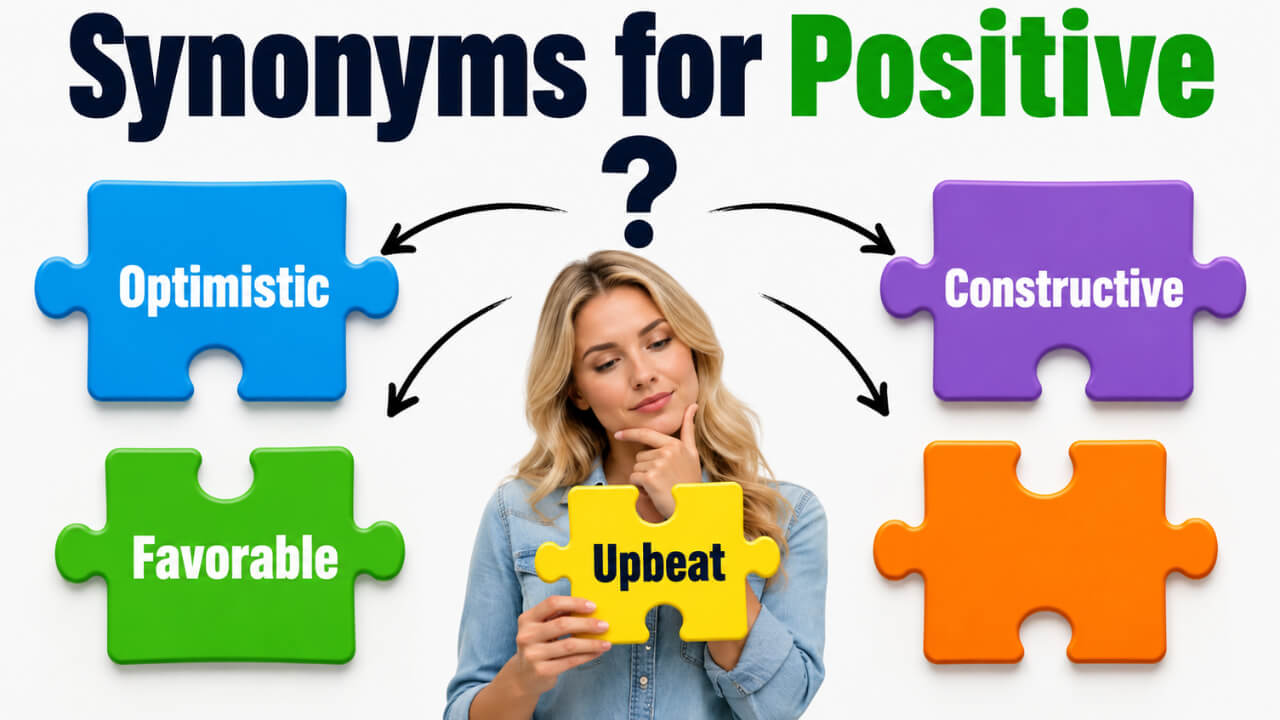
Quick Answer: The best synonyms for positive include optimistic, hopeful, confident, encouraging, favorable, beneficial, constructive, affirmative, certain, and supportive. Use optimistic for a hopeful attitude, favorable for good conditions or opinions, beneficial for helpful results, constructive for useful feedback, affirmative for agreement, and certain when positive means sure or definite.
Pronunciation and Word Details
Word: Positive.
Pronunciation: /ˈpɑːzətɪv/
Part of Speech: Adjective and noun.
Meaning: Positive means good, hopeful, helpful, certain, or showing agreement, depending on the context.
US Pronunciation:
UK Pronunciation:
What Does “Positive” Mean?
Direct Answer: “Positive” means good, hopeful, useful, certain, or agreeing with something.
The word positive is most often used as an adjective. It can describe an attitude, result, effect, response, statement, person, or situation. A positive attitude means a hopeful way of thinking. A positive result may mean a clear or confirmed outcome. A positive answer means yes or agreement.
In grammar and vocabulary, positive can change meaning based on context. In everyday speech, it often means optimistic or good. In formal writing, it may mean favorable, beneficial, constructive, or definite. In science and testing contexts, it can mean confirmed or present.
Meaning, Tone, and Context of “Positive”
Meaning: “Positive” can mean optimistic, good, helpful, confirmed, certain, or affirmative.
Tone: The tone is usually neutral, hopeful, strong, or approving.
Context: It is common in conversation, essays, reports, reviews, feedback, health discussions, personal development, and professional writing.
Formality: “Positive” is flexible and works in both casual and formal writing.
Emotional Use: It can describe hope, confidence, support, and encouragement.
Technical Use: In testing, numbers, electricity, and science, it can have a specific factual meaning.
Best Use: Use “positive” when the meaning is clear from the sentence.
Weak Use: Avoid using “positive” too often when a more exact synonym would explain the idea better.
When and How to Use “Positive”
For Optimism: Use “positive” when describing a hopeful attitude or mindset.
Example: She stayed positive even during a difficult week.
For Good Results: Use “positive” when something has a good effect or outcome.
Example: The new routine had a positive effect on his productivity.
For Agreement: Use “positive” when a response means yes or approval.
Example: The manager gave a positive answer to the request.
For Certainty: Use “positive” when someone is sure about something.
Example: I am positive that I saved the file before closing the laptop.
For Helpful Feedback: Use “positive” when feedback supports improvement or encourages progress.
Example: The teacher gave positive comments on the student’s essay.
For Formal Evaluation: Use “positive” when describing a favorable review, result, or reaction.
Example: The proposal received a positive response from the committee.
Best Synonyms for Positive
Optimistic: Hopeful about future results.
Example: She remained optimistic about the final exam.
Hopeful: Expecting something good to happen.
Example: The team felt hopeful after seeing early progress.
Confident: Sure about success or ability.
Example: He sounded confident during the interview.
Encouraging: Giving hope, support, or motivation.
Example: The early results were encouraging.
Favorable: Showing approval or good conditions.
Example: The report gave a favorable review of the plan.
Beneficial: Producing a good or useful effect.
Example: Regular reading is beneficial for vocabulary growth.
Constructive: Helpful and focused on improvement.
Example: Her constructive advice made the project stronger.
Affirmative: Showing agreement or a yes answer.
Example: He gave an affirmative reply to the question.
Certain: Completely sure about something.
Example: I am certain that the meeting starts at noon.
Supportive: Giving help, approval, or encouragement.
Example: His supportive words helped her feel calmer.
50 Synonyms for Positive with Short Meanings
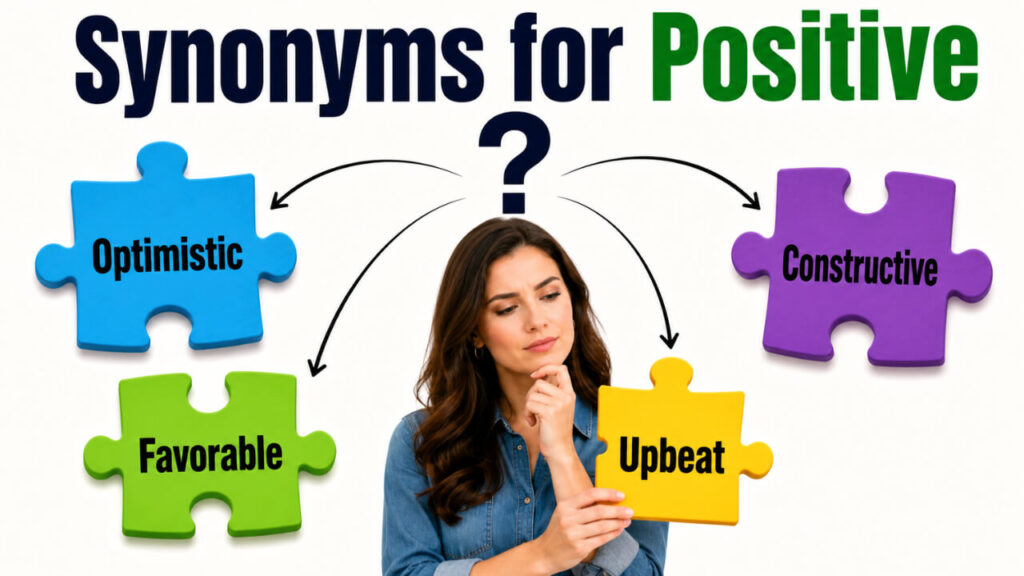
- Optimistic: Expecting good results.
- Hopeful: Feeling that something good may happen.
- Confident: Sure about success or ability.
- Encouraging: Giving hope or motivation.
- Favorable: Showing approval or good conditions.
- Beneficial: Helpful or useful in effect.
- Constructive: Helpful for improvement.
- Affirmative: Expressing agreement or yes.
- Certain: Completely sure.
- Supportive: Giving help or approval.
- Promising: Likely to succeed or improve.
- Good: Pleasant, useful, or morally right.
- Helpful: Making something easier or better.
- Useful: Serving a clear purpose.
- Productive: Creating good results.
- Effective: Producing the desired result.
- Advantageous: Giving a benefit or advantage.
- Valuable: Important and useful.
- Worthwhile: Worth the time or effort.
- Reassuring: Making someone feel less worried.
- Uplifting: Making someone feel happier or stronger.
- Cheerful: Bright and happy in mood.
- Bright: Hopeful, lively, or promising.
- Upbeat: Cheerful and energetic.
- Approving: Showing acceptance or agreement.
- Accepting: Willing to agree or receive something.
- Assenting: Agreeing with a statement or request.
- Agreeable: Pleasant or willing to agree.
- Satisfactory: Good enough to meet expectations.
- Excellent: Extremely good.
- Great: Very good or impressive.
- Strong: Clear, effective, or convincing.
- Clear: Easy to understand or definite.
- Definite: Certain and not doubtful.
- Sure: Confident and certain.
- Convinced: Fully believing something is true.
- Decisive: Clear and final.
- Confirmed: Proven or officially accepted.
- Valid: Correct, reasonable, or acceptable.
- Sound: Sensible, reliable, or strong.
- Healthy: Good for physical, mental, or social well being.
- Wholesome: Good, clean, and morally healthy.
- Rewarding: Giving satisfaction or benefit.
- Fruitful: Producing useful results.
- Successful: Having the desired outcome.
- Effective: Working well.
- Pleasing: Making someone feel satisfied.
- Welcome: Accepted with pleasure.
- Appreciative: Showing gratitude or approval.
- Sanguine: Cheerfully confident about the future.
Read Also:
Synonyms for Ensure

Synonyms for Positive by Context
When Positive Means Optimistic
Best Synonyms: Optimistic, hopeful, upbeat, cheerful, bright, sanguine.
Use: These words describe a person, attitude, mood, or outlook that expects good things.
Example: She had an optimistic view of the situation.
Example: His upbeat attitude helped the whole team stay calm.
When Positive Means Good or Favorable
Best Synonyms: Favorable, good, pleasing, satisfactory, excellent, welcome.
Use: These synonyms work when “positive” describes a review, reaction, result, opinion, or impression.
Example: The new policy received a favorable reaction.
Example: The changes created a welcome improvement in the process.
When Positive Means Helpful or Beneficial
Best Synonyms: Beneficial, helpful, useful, valuable, worthwhile, advantageous.
Use: These words describe something that creates improvement, support, or practical value.
Example: Daily practice is beneficial for language learning.
Example: The guide offered useful advice for beginners.
When Positive Means Constructive
Best Synonyms: Constructive, productive, effective, supportive, encouraging, sound.
Use: These choices fit feedback, criticism, advice, communication, and problem solving.
Example: The editor gave constructive feedback on the article.
Example: Their productive conversation helped solve the issue.
When Positive Means Certain
Best Synonyms: Certain, sure, definite, convinced, clear, confirmed.
Use: These synonyms are best when “positive” means sure, confident, or free from doubt.
Example: I am certain that the answer is correct.
Example: She was convinced that the plan would work.
When Positive Means Agreement
Best Synonyms: Affirmative, approving, assenting, accepting, agreeable.
Use: These options work when “positive” means yes, approval, or consent.
Example: The board gave an affirmative response.
Example: His approving nod showed that he agreed.
Another Word for Positive
Direct Answer: The best single replacement for “positive” is favorable when you mean good, approving, or beneficial. However, the best alternative depends on context. Use optimistic for attitude, constructive for feedback, certain for confidence, and affirmative for agreement.
Original: The teacher gave positive feedback on the essay.
Better Option: The teacher gave constructive feedback on the essay.
Original: The company received a positive review.
Better Option: The company received a favorable review.
Original: She stayed positive during the challenge.
Better Option: She stayed optimistic during the challenge.
Original: I am positive that the answer is correct.
Better Option: I am certain that the answer is correct.
When Not to Use “Positive”
Do not use “positive” when the sentence needs a more exact meaning. The word can be too general if you are describing emotion, agreement, certainty, health, data, or results. A clearer synonym often improves the sentence.
Weak: The meeting had a positive result.
Better: The meeting had a productive result.
Weak: He gave a positive answer.
Better: He gave an affirmative answer.
Weak: I am positive she called yesterday.
Better: I am certain she called yesterday.
Weak: The review was positive.
Better: The review was favorable.
Weak: Her words were positive.
Better: Her words were encouraging.
Weak: The advice was positive.
Better: The advice was constructive.
Words Commonly Confused With Positive
Positive vs Optimistic: “Positive” can mean good, helpful, certain, or approving, while “optimistic” only means hopeful about the future.
Positive vs Favorable: “Positive” is broader, while “favorable” means approving, supportive, or good for a situation.
Positive vs Beneficial: “Positive” can describe attitude or results, while “beneficial” specifically means helpful or useful.
Positive vs Constructive: “Positive” may simply sound good, while “constructive” means helpful for improvement.
Positive vs Affirmative: “Positive” can mean yes in some contexts, but “affirmative” is more exact for agreement or approval.
Positive vs Certain: “Positive” can mean sure, but “certain” is clearer when talking about confidence or facts.
Positive vs Good: “Good” is simple and broad, while “positive” often suggests improvement, hope, approval, or a clear result.
Which Synonym Should You Choose?
Choose optimistic when describing a hopeful attitude, future expectation, or personal mindset.
Choose hopeful when the tone should feel softer, emotional, and encouraging.
Choose favorable when writing about reviews, conditions, reactions, opinions, or results.
Choose beneficial when describing something that helps someone or produces a useful effect.
Choose constructive when talking about feedback, advice, criticism, or discussion that helps improvement.
Choose affirmative when the meaning is yes, agreement, consent, or approval.
Choose certain when positive means sure, definite, or free from doubt.
Choose encouraging when something gives hope, confidence, or motivation.
Choose supportive when someone gives help, approval, or emotional strength.
Choose productive when an action, meeting, or conversation creates useful progress.
Real Life Examples of “Positive” in Sentences
Original: She had a positive attitude before the interview.
Better Option: She had an optimistic attitude before the interview.
Original: The doctor noticed a positive change in his health.
Better Option: The doctor noticed a beneficial change in his health.
Original: The teacher gave positive comments on the assignment.
Better Option: The teacher gave encouraging comments on the assignment.
Original: The manager had a positive reaction to the idea.
Better Option: The manager had a favorable reaction to the idea.
Original: I am positive that the meeting is today.
Better Option: I am certain that the meeting is today.
Original: His positive answer helped us move forward.
Better Option: His affirmative answer helped us move forward.
Original: The discussion had a positive effect on the team.
Better Option: The discussion had a productive effect on the team.
Original: Her positive advice helped me improve the paragraph.
Better Option: Her constructive advice helped me improve the paragraph.
Original: The early results look positive.
Better Option: The early results look promising.
Original: His positive words made everyone feel better.
Better Option: His supportive words made everyone feel better.
Synonym Groups and Usage Differences
Optimism Group
Synonyms: Optimistic, hopeful, upbeat, cheerful, bright, sanguine.
Use: This group describes hope, confidence, and a good emotional outlook.
Example: Her optimistic mindset helped her continue after the setback.
Favorable Result Group
Synonyms: Favorable, good, satisfactory, excellent, pleasing, welcome.
Use: This group describes good reactions, reviews, results, and impressions.
Example: The proposal received a favorable response from the committee.
Benefit Group
Synonyms: Beneficial, helpful, useful, valuable, advantageous, worthwhile.
Use: This group explains practical value, improvement, and helpful effects.
Example: Reading daily is beneficial for vocabulary and focus.
Constructive Feedback Group
Synonyms: Constructive, productive, effective, encouraging, supportive, sound.
Use: This group fits comments, advice, criticism, teamwork, and problem solving.
Example: Constructive feedback helps writers improve without feeling discouraged.
Certainty Group
Synonyms: Certain, sure, definite, convinced, confirmed, clear.
Use: This group shows confidence, proof, or lack of doubt.
Example: I am certain that the answer is correct.
Agreement Group
Synonyms: Affirmative, approving, assenting, accepting, agreeable.
Use: This group is useful when the meaning is yes, approval, or consent.
Example: The committee gave an affirmative response to the request.
Antonyms of Positive
Negative: Bad, harmful, doubtful, or showing disagreement.
Pessimistic: Expecting bad results.
Unfavorable: Not approving or not helpful.
Harmful: Causing damage or trouble.
Destructive: Causing loss, damage, or decline.
Discouraging: Taking away hope or confidence.
Doubtful: Not sure or not definite.
Uncertain: Lacking confidence or clarity.
Critical: Focused on faults or problems.
Opposing: Showing disagreement or resistance.
Unhelpful: Not useful or supportive.
Adverse: Harmful or working against success.
Gloomy: Sad, hopeless, or dark in mood.
Poor: Low in quality or not good.
Invalid: Not correct, acceptable, or proven.
Comparison: Positive vs Related Words
Positive vs Optimistic
Difference: “Positive” is broader and can mean good, helpful, certain, or approving. “Optimistic” only means expecting good results.
Example With Positive: She had a positive attitude about the project.
Example With Optimistic: She had an optimistic attitude about the project’s success.
Positive vs Favorable
Difference: “Positive” can describe mood, certainty, agreement, or results. “Favorable” is best for approval, reviews, reactions, and conditions.
Example With Positive: The plan received positive feedback.
Example With Favorable: The plan received favorable feedback.
Positive vs Beneficial
Difference: “Positive” can describe a general good effect. “Beneficial” clearly means useful or helpful.
Example With Positive: Exercise has a positive effect on health.
Example With Beneficial: Exercise has a beneficial effect on health.
Positive vs Constructive
Difference: “Positive” may mean encouraging or good. “Constructive” means useful for improvement.
Example With Positive: She gave positive criticism.
Example With Constructive: She gave constructive criticism.
Positive vs Affirmative
Difference: “Positive” can sometimes mean yes, but “affirmative” is more exact for agreement or approval.
Example With Positive: He gave a positive response.
Example With Affirmative: He gave an affirmative response.
Positive vs Certain
Difference: “Positive” can mean sure in conversation. “Certain” is clearer and more direct in formal writing.
Example With Positive: I am positive that the door was locked.
Example With Certain: I am certain that the door was locked.
Positive vs Good
Difference: “Good” is simple and general. “Positive” often suggests improvement, hope, approval, or a helpful direction.
Example With Positive: The meeting ended on a positive note.
Example With Good: The meeting ended with a good result.
Common Phrases and Expressions With Positive
Positive Attitude: A hopeful and confident way of thinking.
Positive Thinking: The habit of focusing on good possibilities.
Positive Result: A result that is good, clear, or confirmed.
Positive Feedback: Comments that approve, encourage, or help improvement.
Positive Change: An improvement or helpful difference.
Positive Effect: A good or beneficial influence.
Positive Response: A reply that shows agreement, approval, or support.
Positive Energy: A cheerful, hopeful, or encouraging mood.
Positive Outlook: A hopeful view of the future.
Positive Influence: A person or thing that helps someone improve.
Common Mistakes to Avoid
Using Positive Too Generally: Avoid using “positive” when a more specific word would be clearer. Use optimistic for attitude, favorable for reviews, and beneficial for effects.
Confusing Positive With Certain: In casual speech, “I am positive” means “I am sure.” In formal writing, certain or sure may be clearer.
Using Positive For Every Good Thing: Do not repeat “positive” too often in one paragraph. Mix in words like helpful, encouraging, valuable, and constructive.
Choosing The Wrong Synonym: Do not use affirmative for attitude. It is better for yes answers, approval, and agreement.
Overusing Positive Feedback: “Positive feedback” can mean praise or helpful comments, but “constructive feedback” is better when the advice includes improvement.
Ignoring Context: A “positive result” can mean a good result or a confirmed test result, depending on the subject. Make sure the sentence explains the meaning clearly.
Sounding Vague: Instead of writing “positive impact,” explain the impact. Words like beneficial, productive, or valuable often give stronger meaning.
Conclusion
The best synonyms for positive depend on meaning and context. Use optimistic for a hopeful mindset, favorable for good reactions or reviews, beneficial for helpful effects, constructive for useful feedback, affirmative for agreement, and certain when positive means sure. Since “positive” has several meanings, choosing the right synonym makes your writing clearer, more natural, and more accurate. A precise word helps readers understand whether you mean hope, approval, certainty, benefit, or agreement.
FAQs About Synonyms for Positive
What is the best synonym for positive?
Answer: The best synonym for positive is optimistic when describing attitude, and favorable when describing results, reviews, or reactions.
What is another word for positive attitude?
Answer: Another word for positive attitude is optimistic attitude. You can also use hopeful outlook, upbeat mindset, or cheerful approach.
What is a formal synonym for positive?
Answer: Formal synonyms for positive include favorable, beneficial, constructive, affirmative, certain, and advantageous.
What is a synonym for positive feedback?
Answer: A good synonym for positive feedback is constructive feedback when the comments help improvement. You can also use encouraging feedback or supportive comments.
Does positive mean certain?
Answer: Yes, in some sentences positive means certain or sure. For example, “I am positive” means “I am certain.”
What is the opposite of positive?
Answer: The opposite of positive depends on context. Common antonyms include negative, pessimistic, unfavorable, harmful, doubtful, and uncertain.
Can positive mean yes?
Answer: Yes, positive can mean yes or agreement in some contexts. However, affirmative is usually a clearer synonym when you mean yes.
